The Best River Book You’ll Read This Year
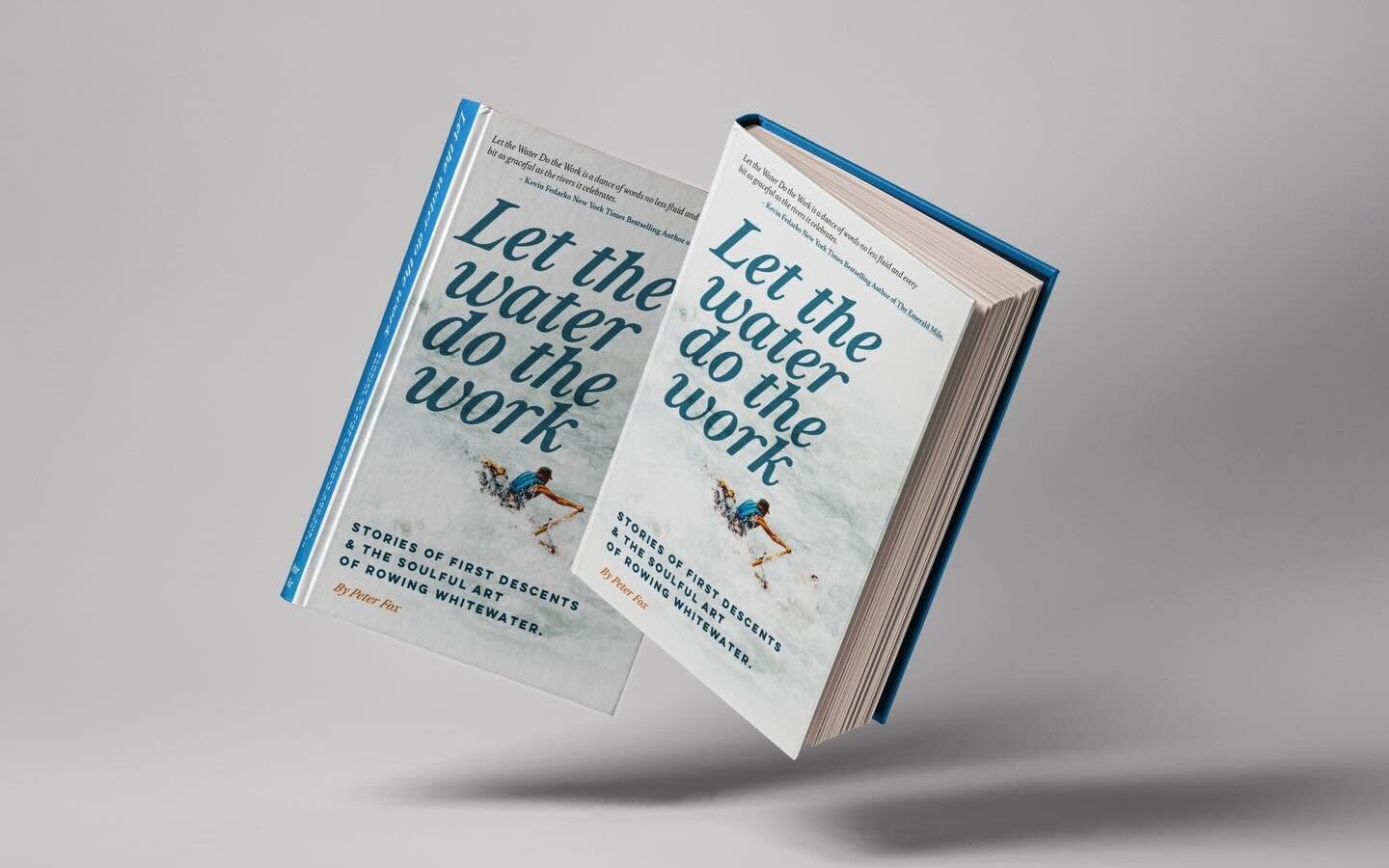
A Review of Peter Fox’s Let the Water Do the Work
We’ve all heard whitewater stories told by someone who knows what they’re talking about, but wasn’t actually there. They’re okay, but they lack some immediacy.
And we’ve all read whitewater stories written by someone who was there, but doesn’t really know what they’re talking about. They’re fine, but they lack some credibility.
Let the Water Do the Work was written by Peter Fox, someone who was there and who definitely knows what he’s talking about. The stories are immediate, the voice is credible, and the result is an engaging, authentic, and thoroughly enjoyable read.
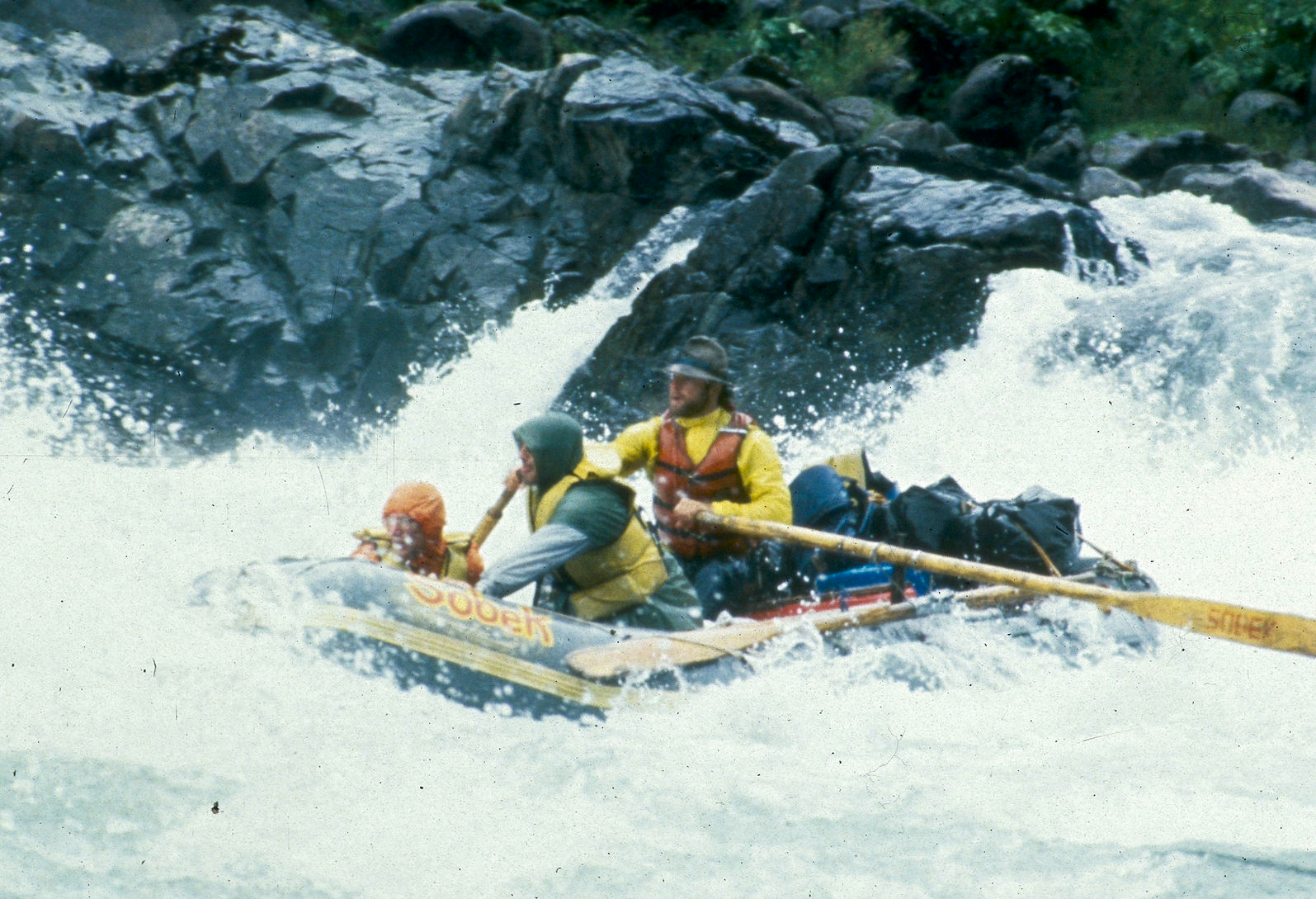
The book is a collection of stories, snippets, and anecdotes about rowing boats through whitewater woven into a meandering retrospective of Fox’s life on the river – a journey that parallels the evolution of modern whitewater rafting. Honestly, but modestly told, each recollection is punctuated with a candid (and unassuming) “never-before”, “first-ever”, or “now-known-as” (or, in some cases, a “never-again” or “what-were-we-thinking?”).
Like all good stories – and rivers – there’s a lot going on. There are thrilling parts (flood stage on the Bio-Bio, highwater on the Tuolumne, first-descent of the Futaleufú, etc.) and calm parts (Galloway technique, self-bailing rafts, downstream ferrying, etc.) with lots of interesting side journeys along the way (enduring friendships, fortuitous encounters, South American dance parties, etc.).
And, like all good stories – and rivers – everything flows together smoothly. It’s not a continuous Class V torrent or an endless flatwater pool; it undulates from page-turner to slow-burner with each new stretch coming just when you need it, just when you’re ready for it; right on time.
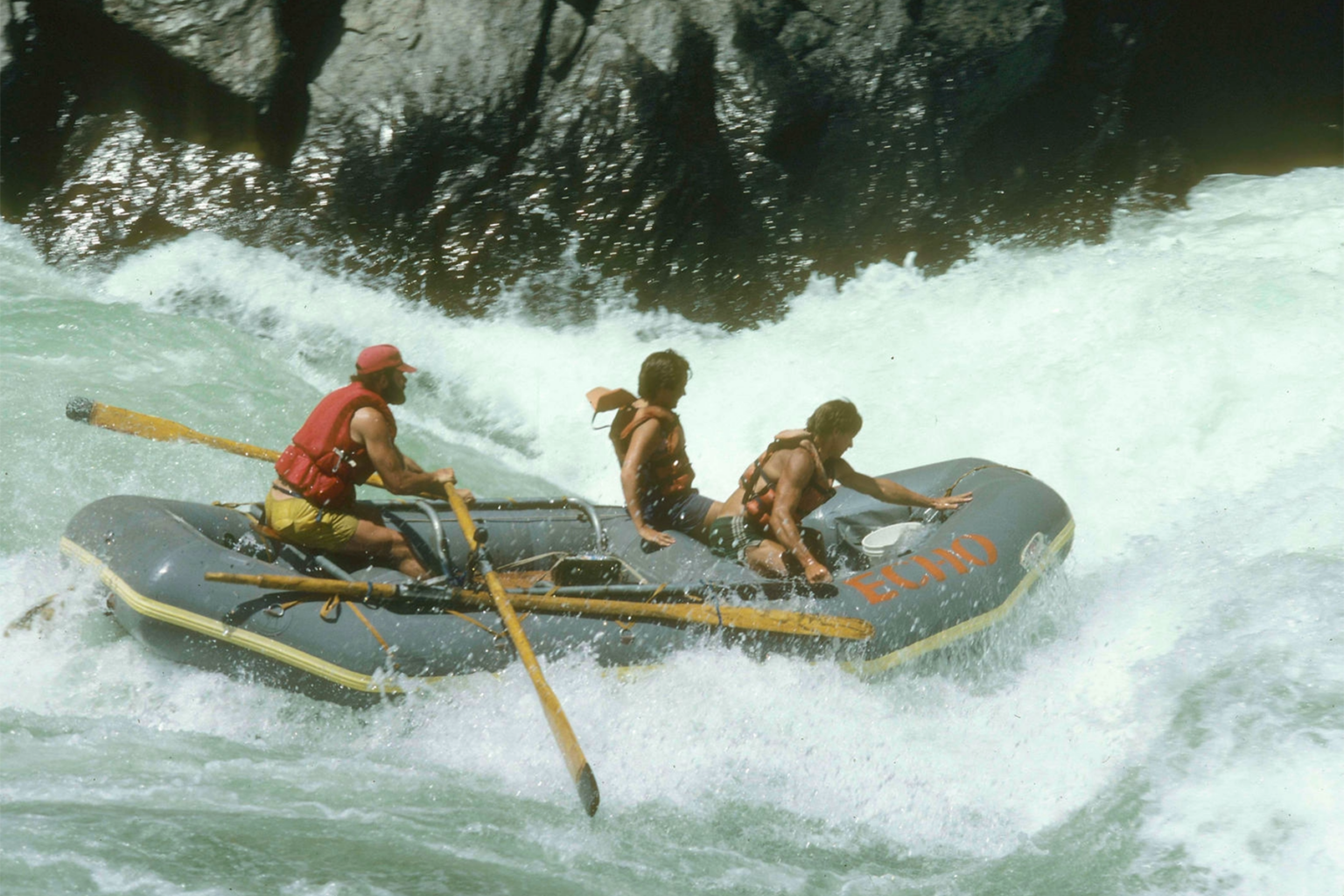
Fox’s word choices, descriptions, and explanations are spot on. Exciting, but not inflated; suspenseful, but not Hollywood. Goldilocks. His behind-the-scenes chapter on the audacious (and, IMHO, sketchy) 1985 made-for-TV expedition down the Grand Canyon of the Stikine is, like that stretch of river, jaw-dropping.
“We had slain nothing, conquered nothing. We had visited the inner sanctum of something huge and far more powerful than ourselves, been anointed, and permitted to go free.”
And his musings on recognizing and collaborating with the energy of the river – of letting the water do the work – are, like those occasions, reflective and enlightening. “I row best when I listen.”
A great book to read as you count down the days until your next adventure.
If you’ve ever been the one with the oars in your hands – if you know the sweet feeling of having the perfect ferry angle and taking the perfect strokes and hitting the perfect line and emerging right-side up and dripping wet – you’ll find yourself saying: “Yes, that’s what it feels like.” And if you’ve never been the one to have the oars in your hands – if you have no idea what a ferry angle is and have always wondered what your guide was seeing and sensing and thinking about (and probably talking about afterwards) – you’ll find yourself saying: “Oh, so that’s what it feels like.”
Let the Water Do The Work is a blend of The Emerald Mile and The Exploration of the Colorado River and Its Canyons with some hints of Barbarian Days and Into Thin Air; a memoir inside a how-to manual inside a history book inside an adventure journal. A great book to read as you count down the days until your next adventure.
And, icing on the cake: Peter is donating all the royalties from the sale of his books to three river conservation organizations: Yosemite Rivers Alliance, American Rivers, and American Whitewater.
BONUS CONTENT: I asked my friend Mikey Biggwater what he thought of the book…
“I liked the pictures.”
Please note that some of the links above are affiliate links and OARS will earn a small commission if you decide to make a purchase through one of the links.

Sign up for Our Newsletter