
John Wesley Powell Retrace
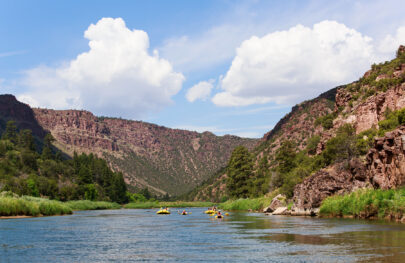
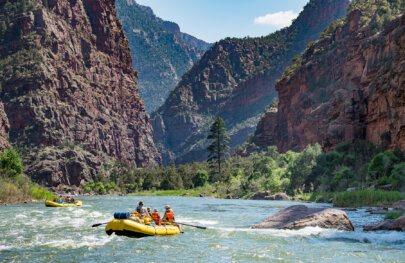
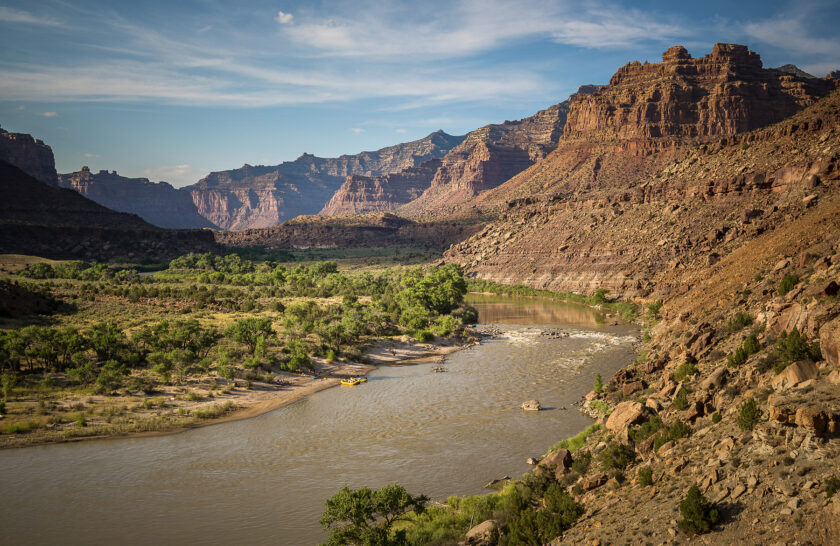
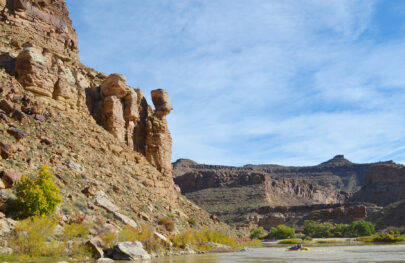
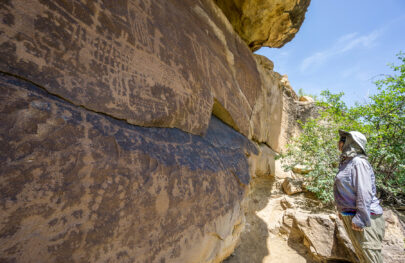
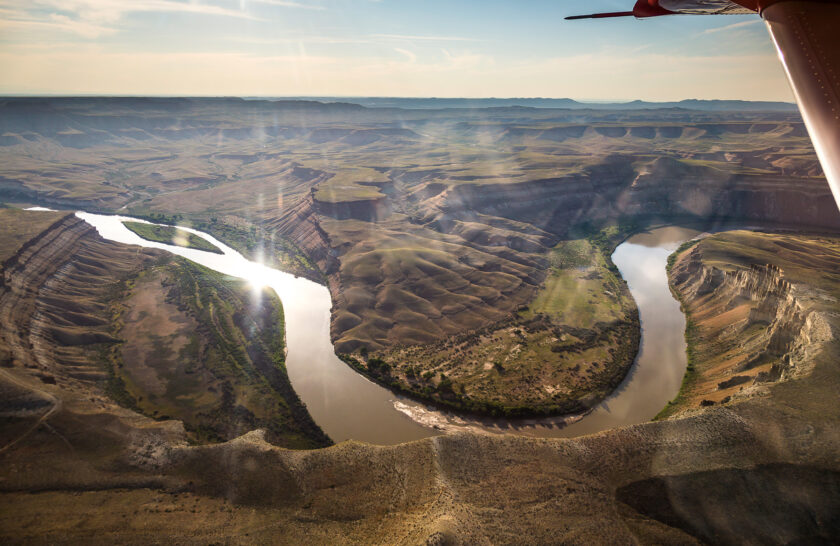
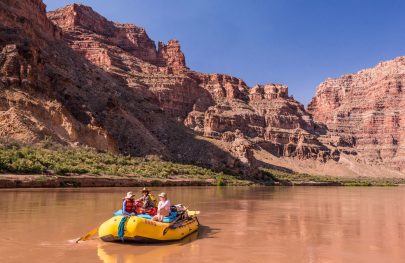
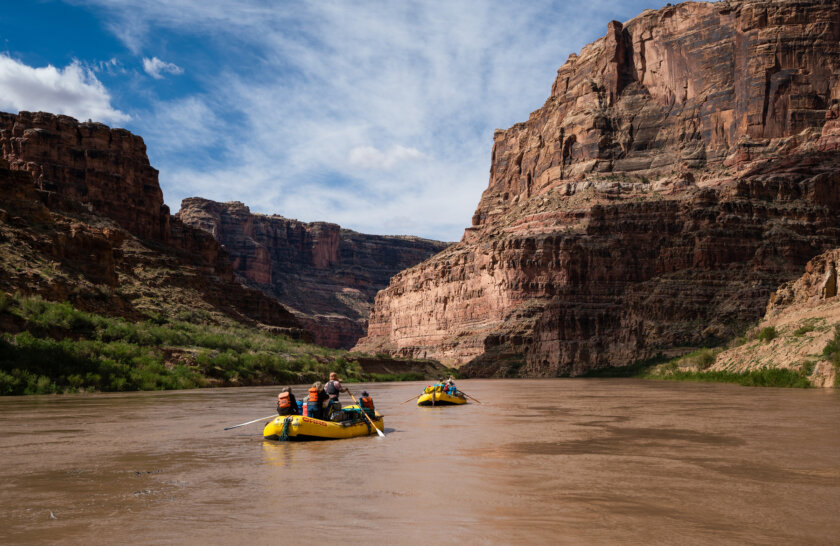
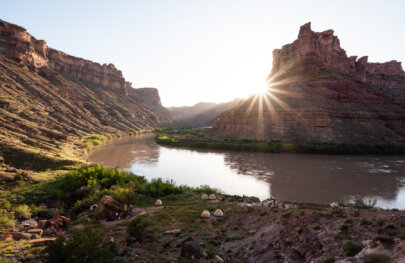
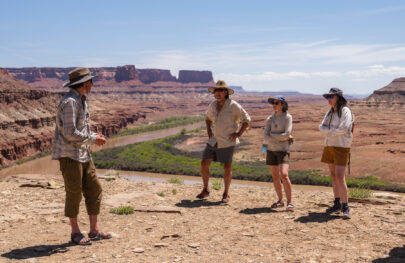
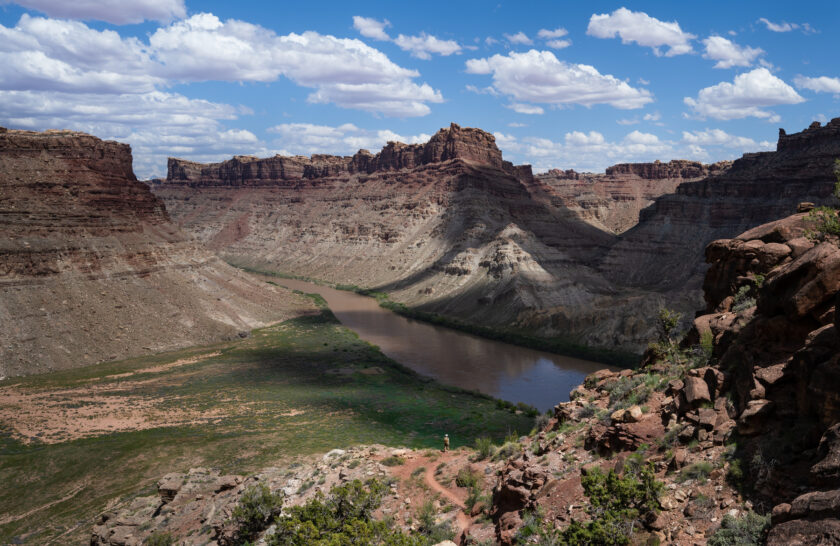
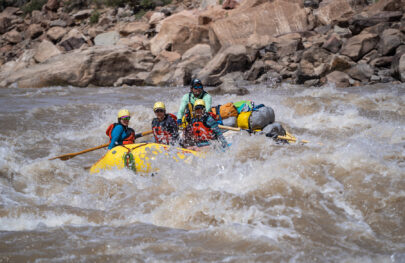
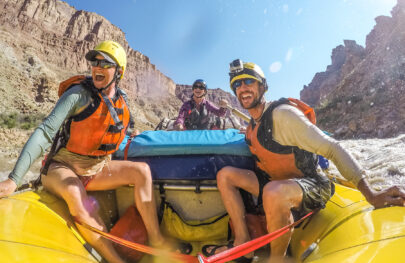
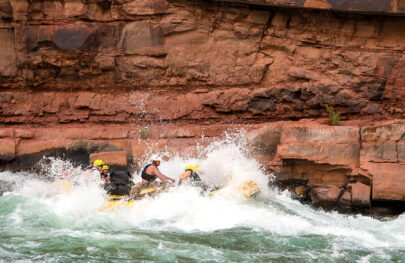
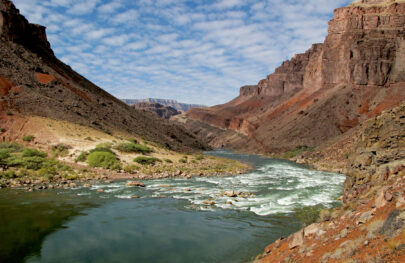
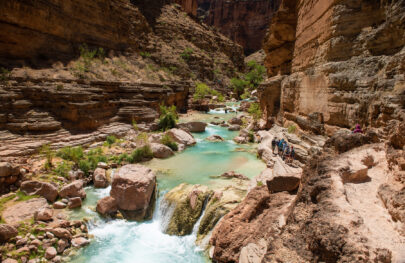
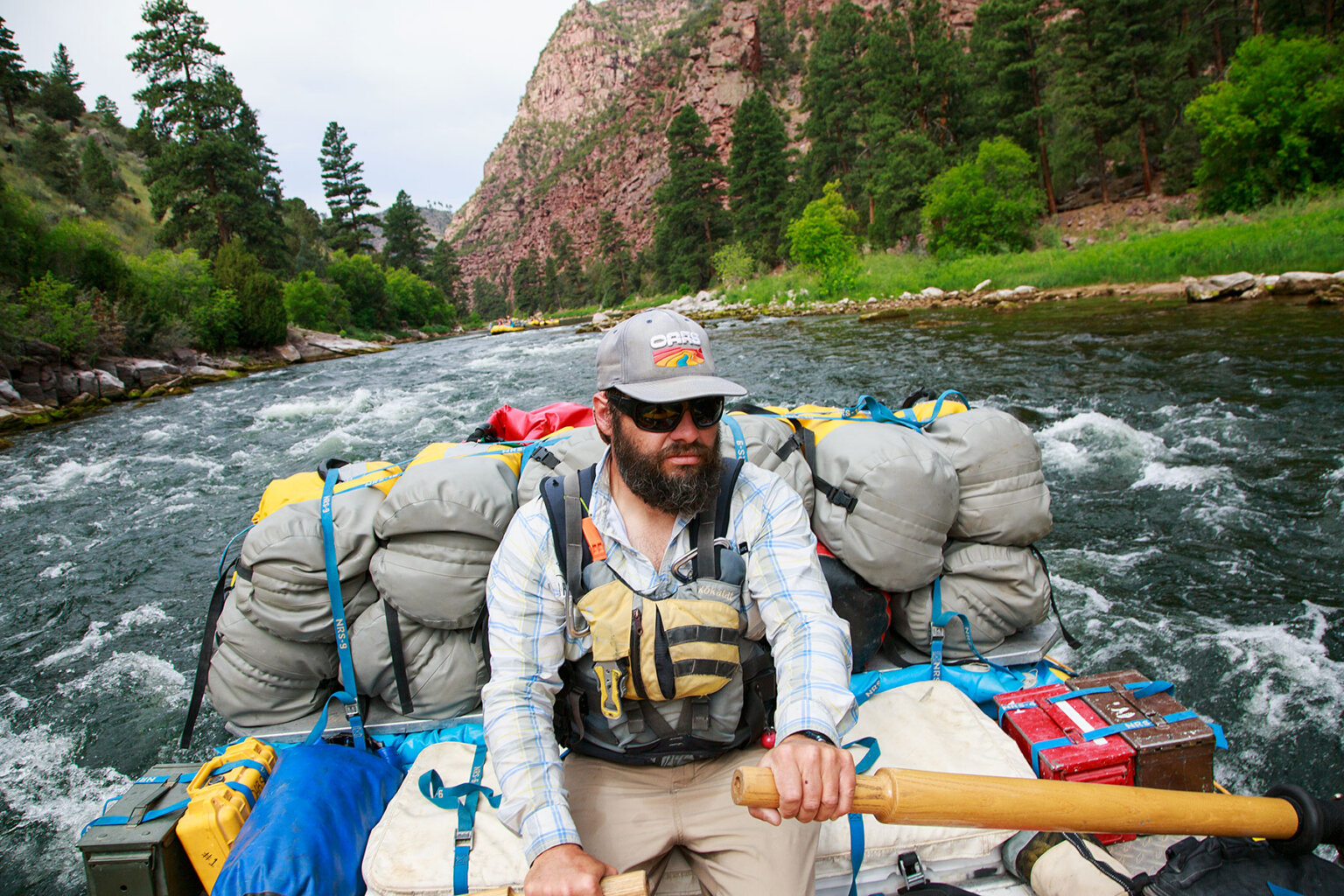
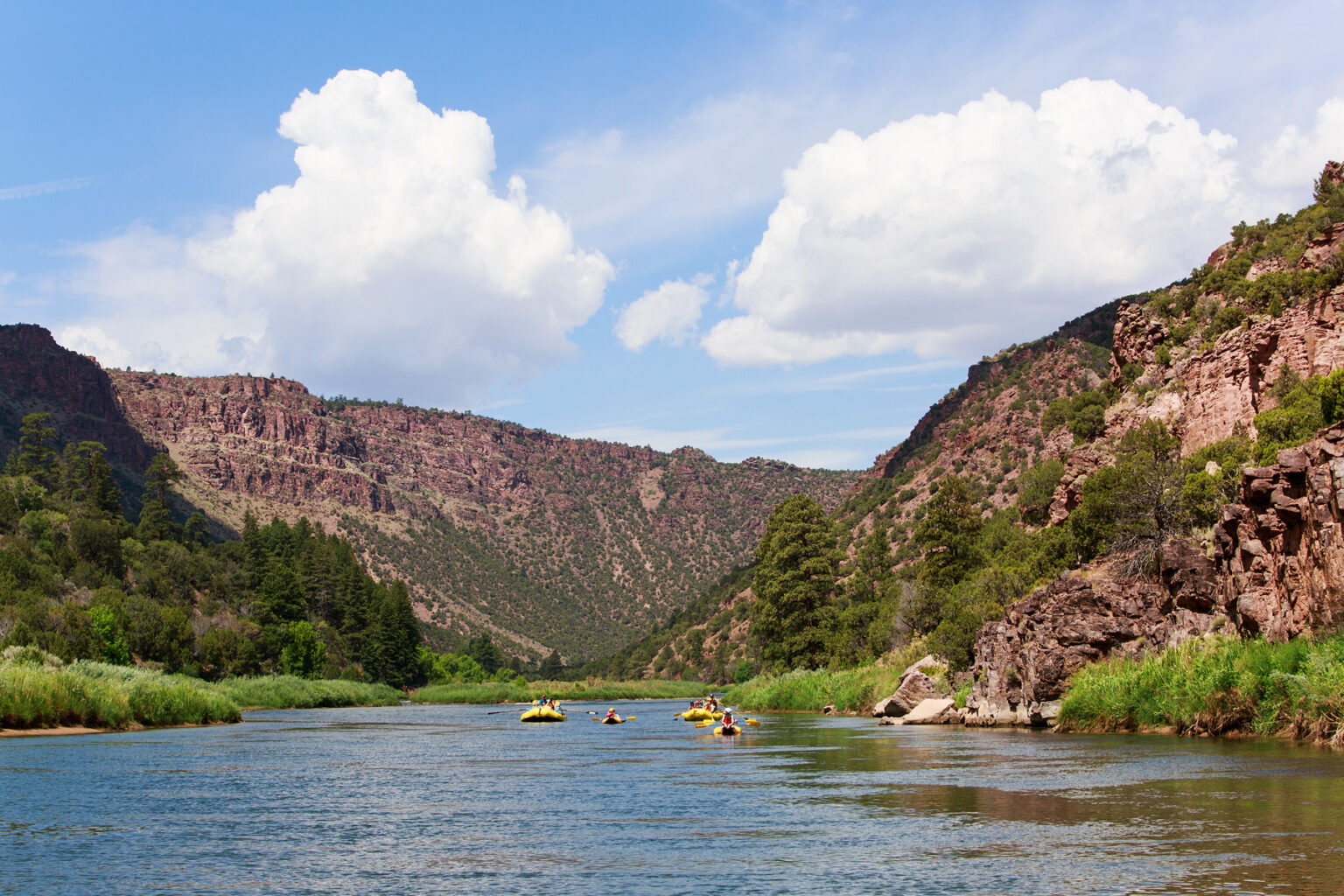
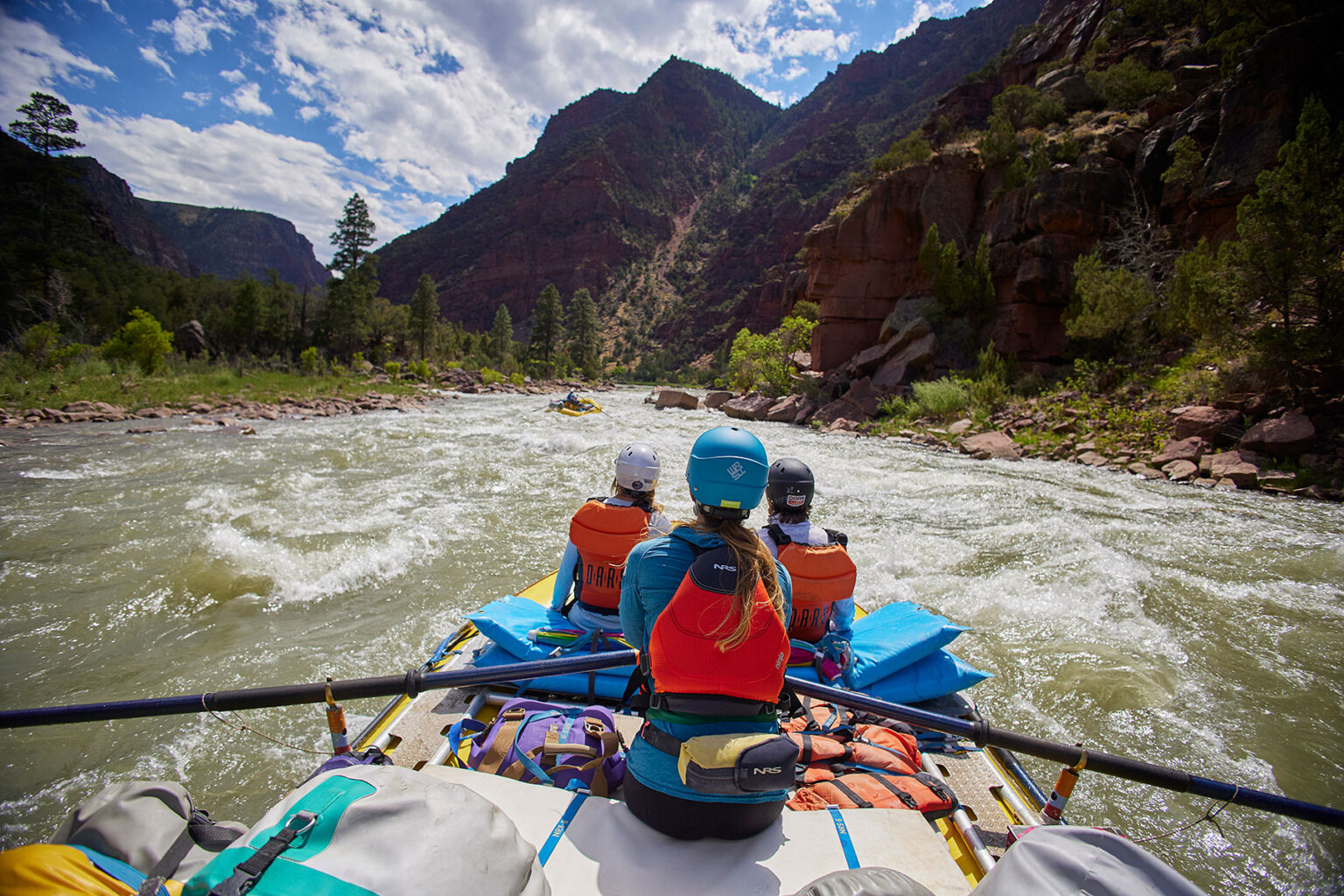
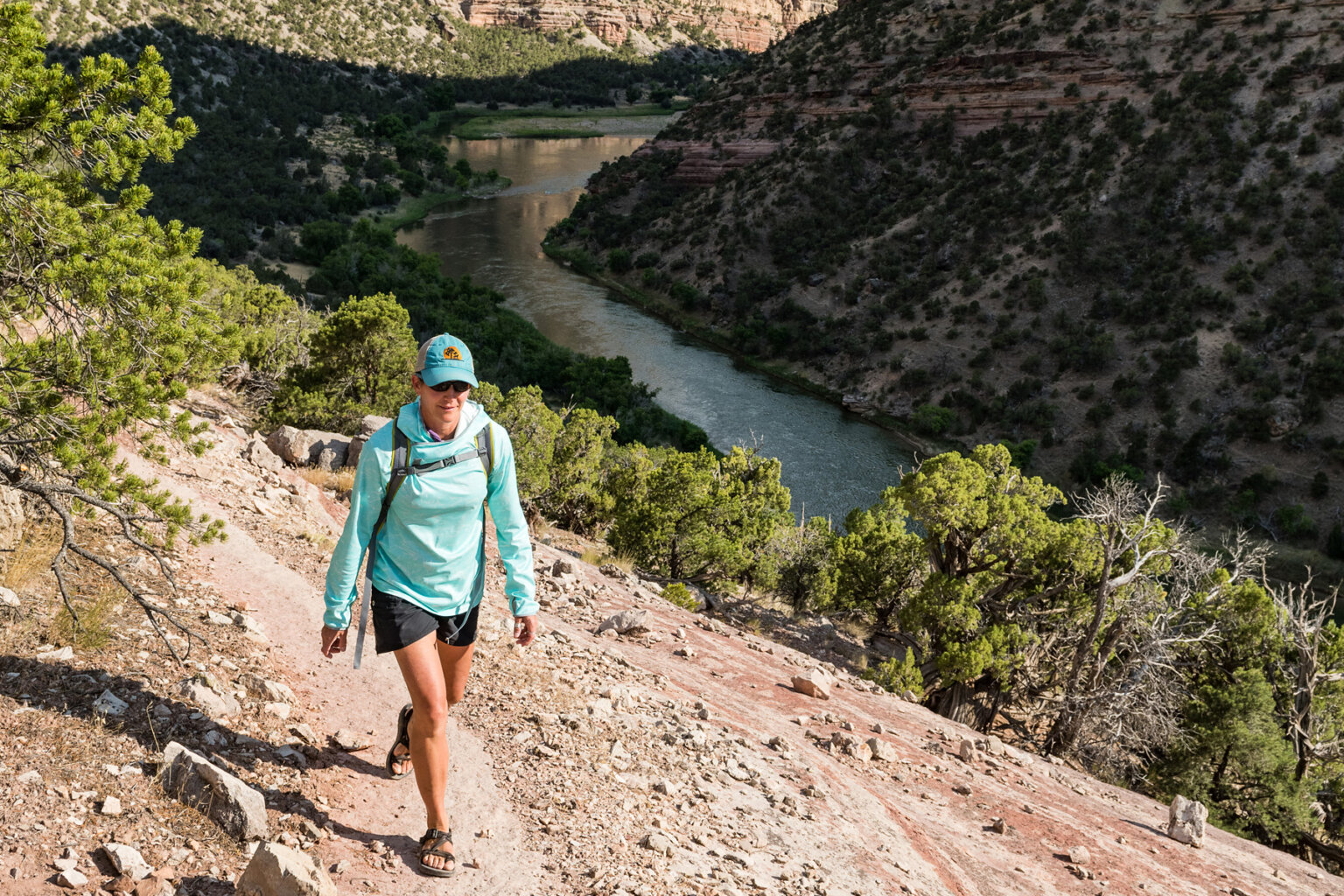
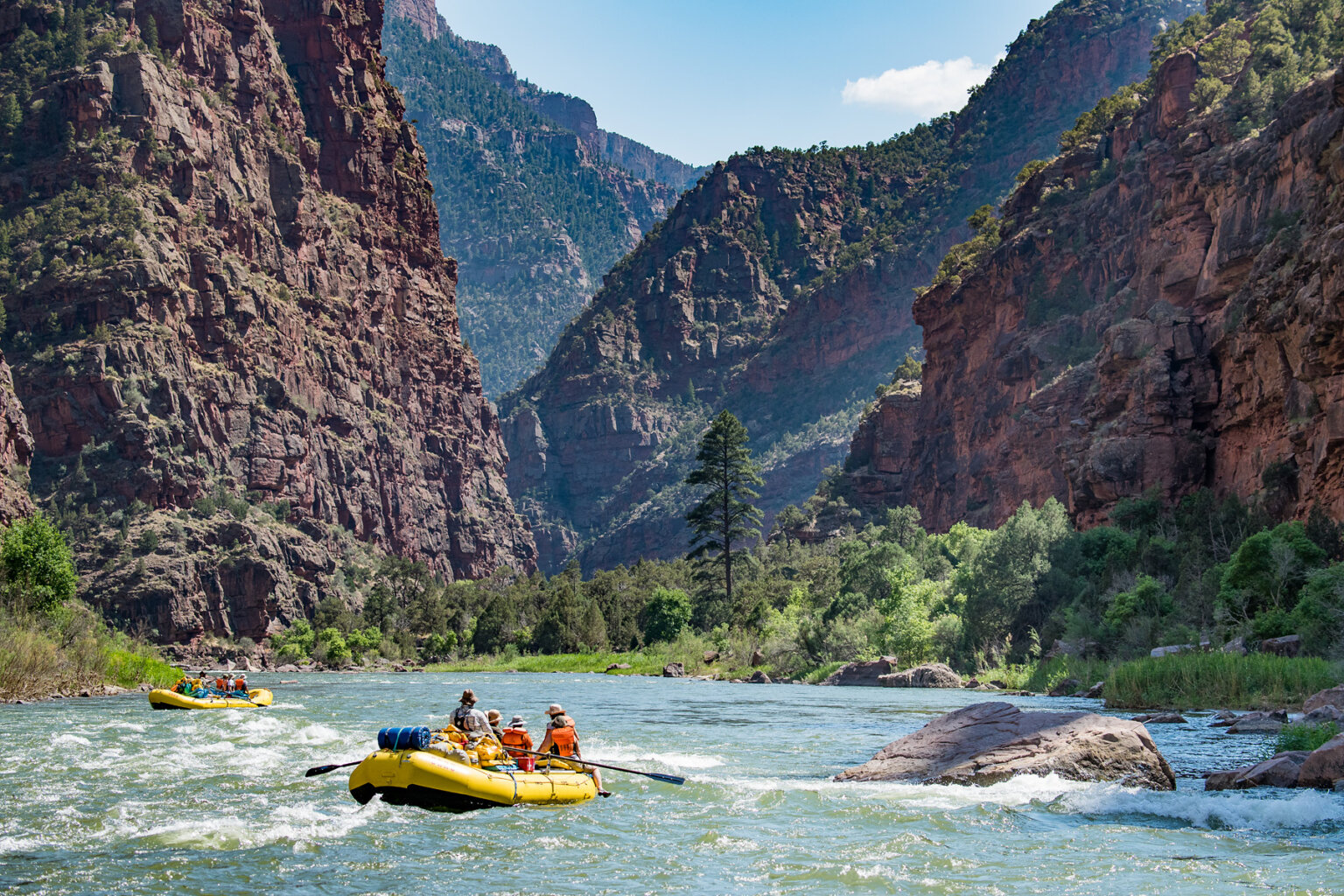
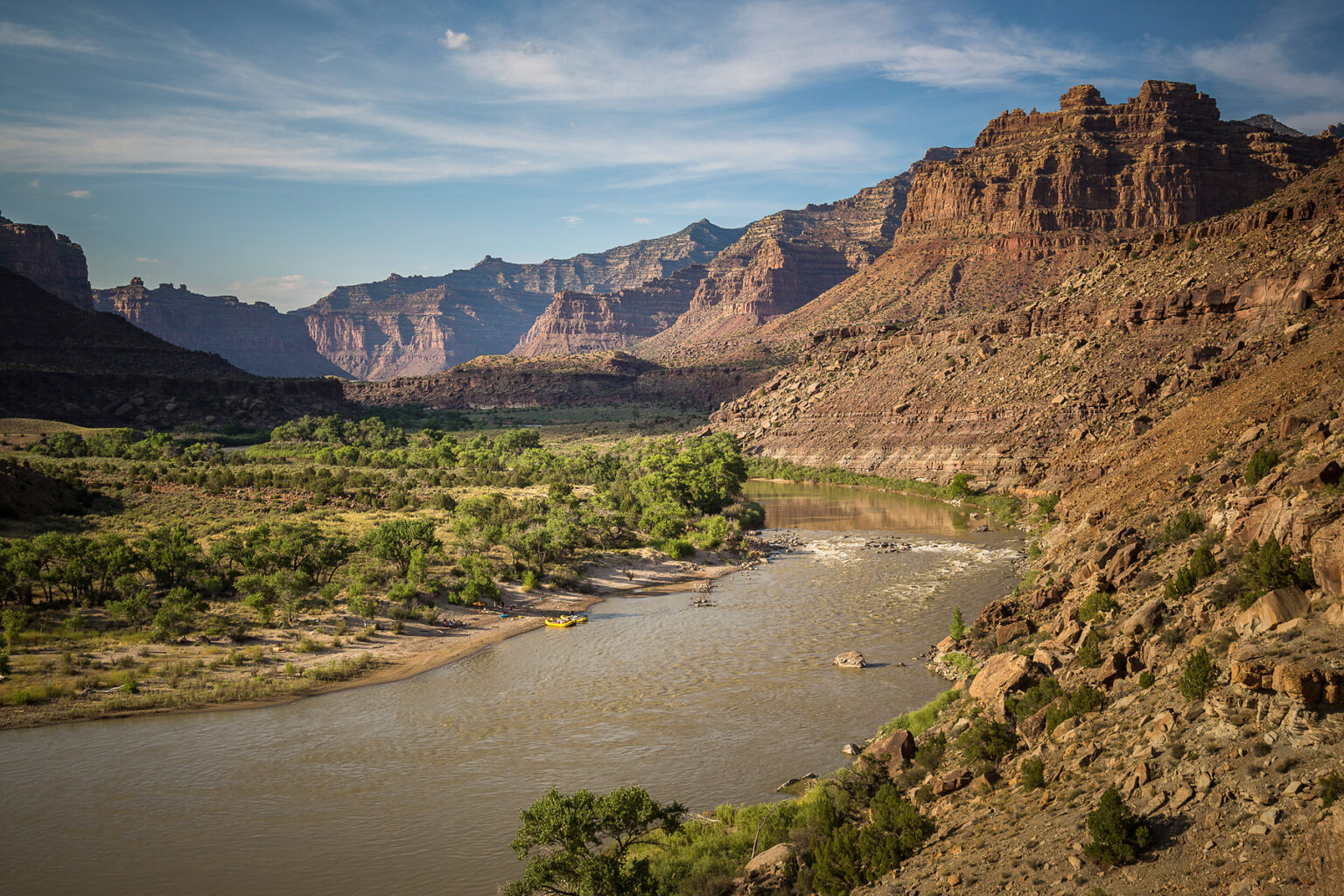
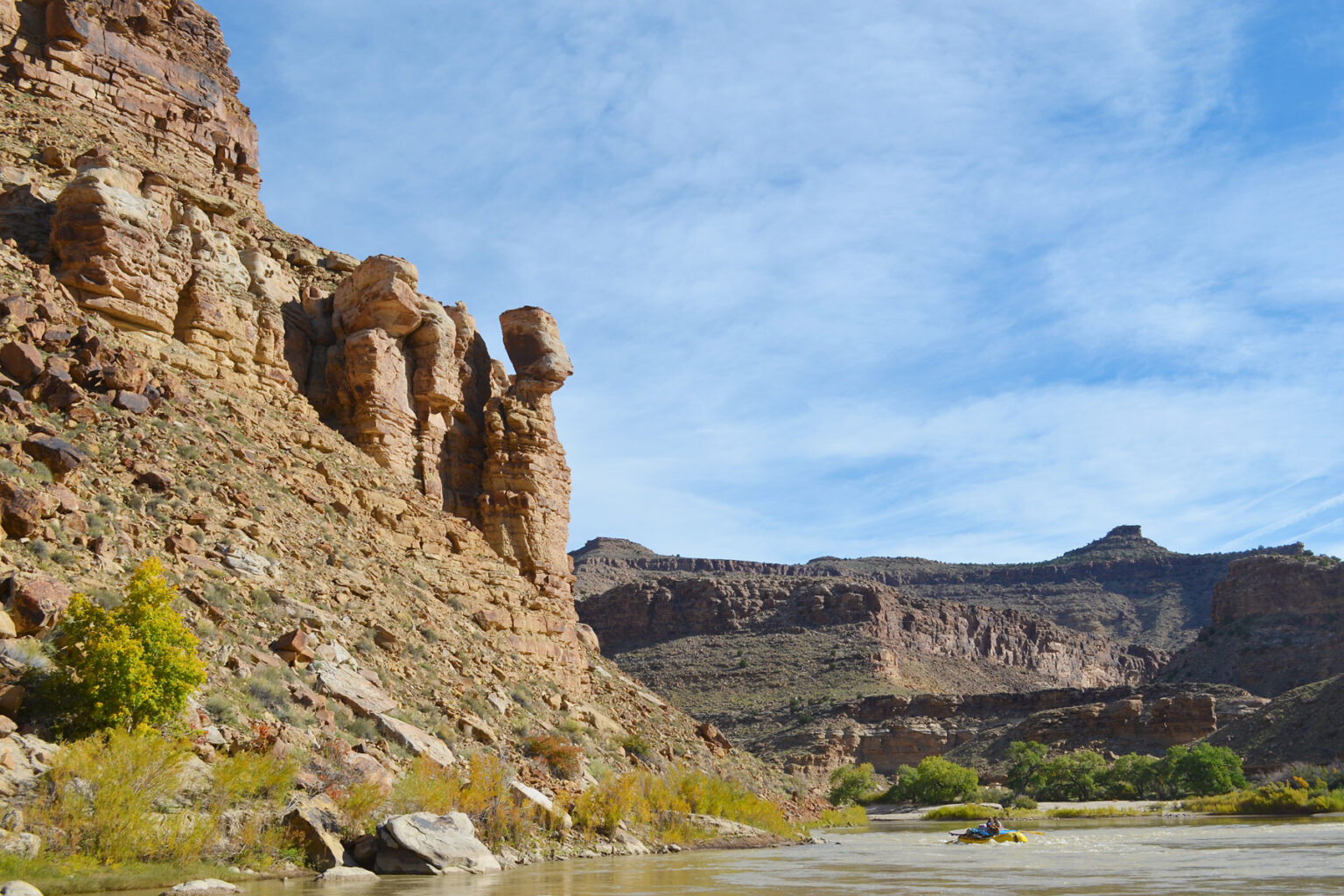
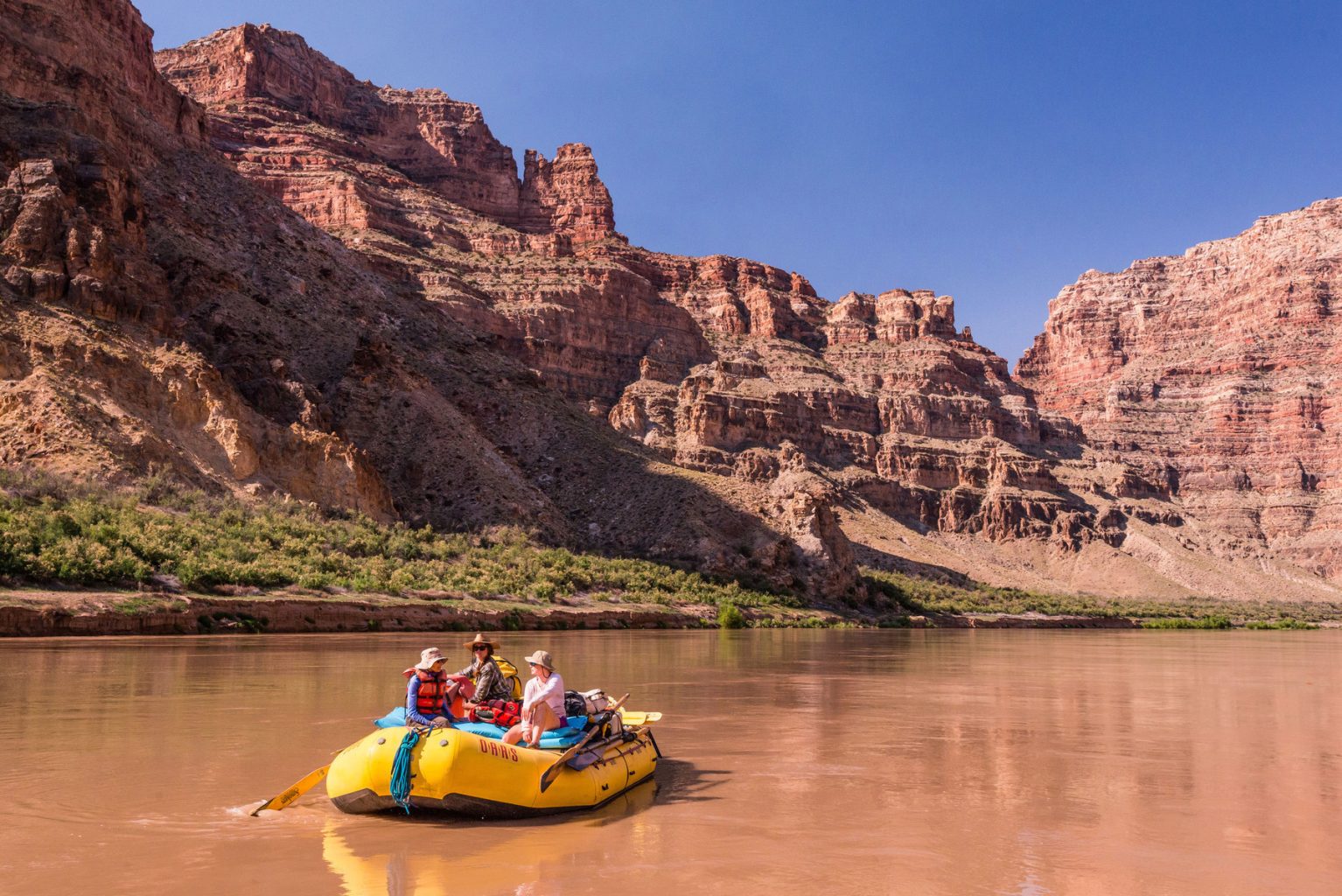
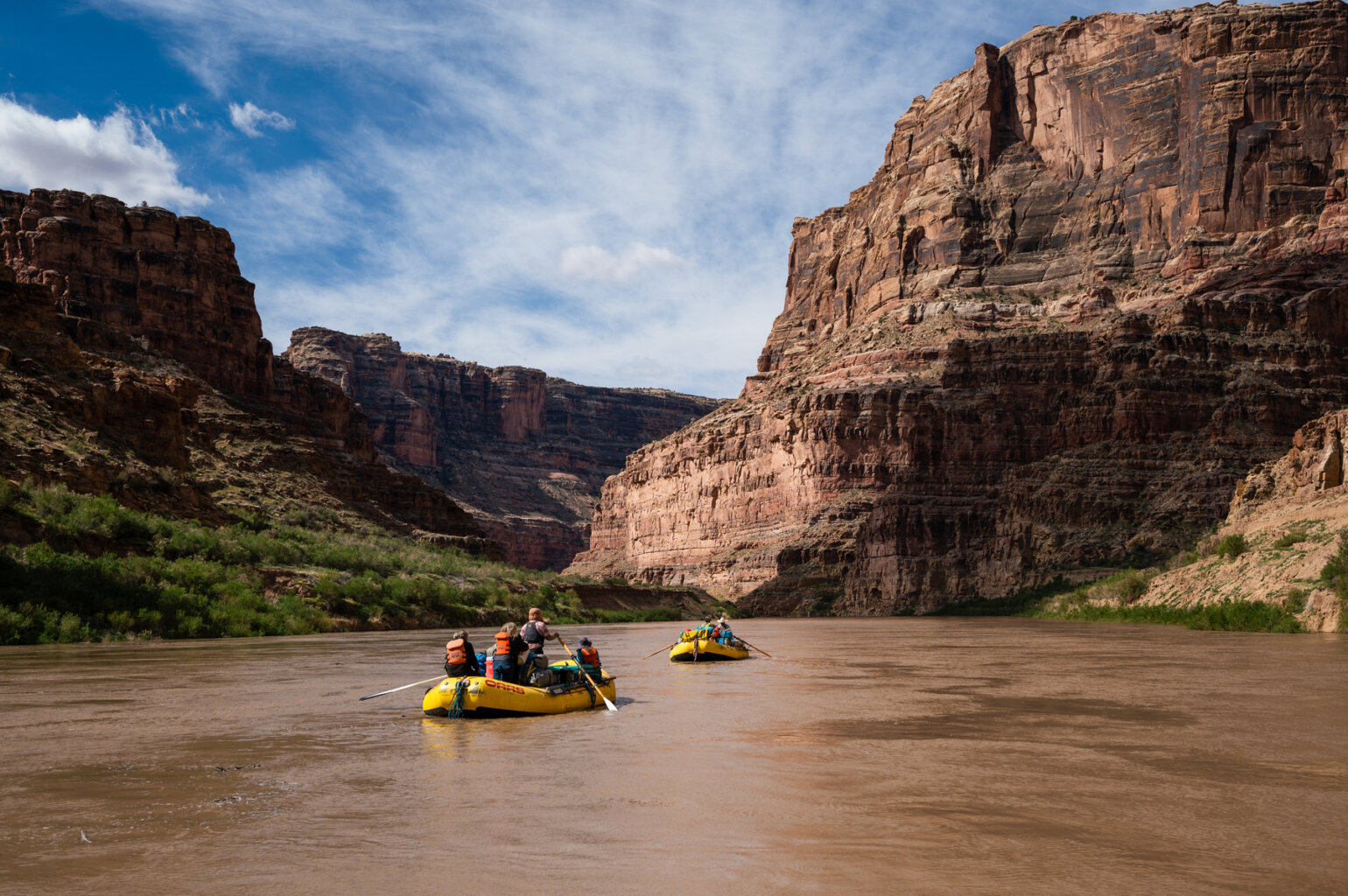
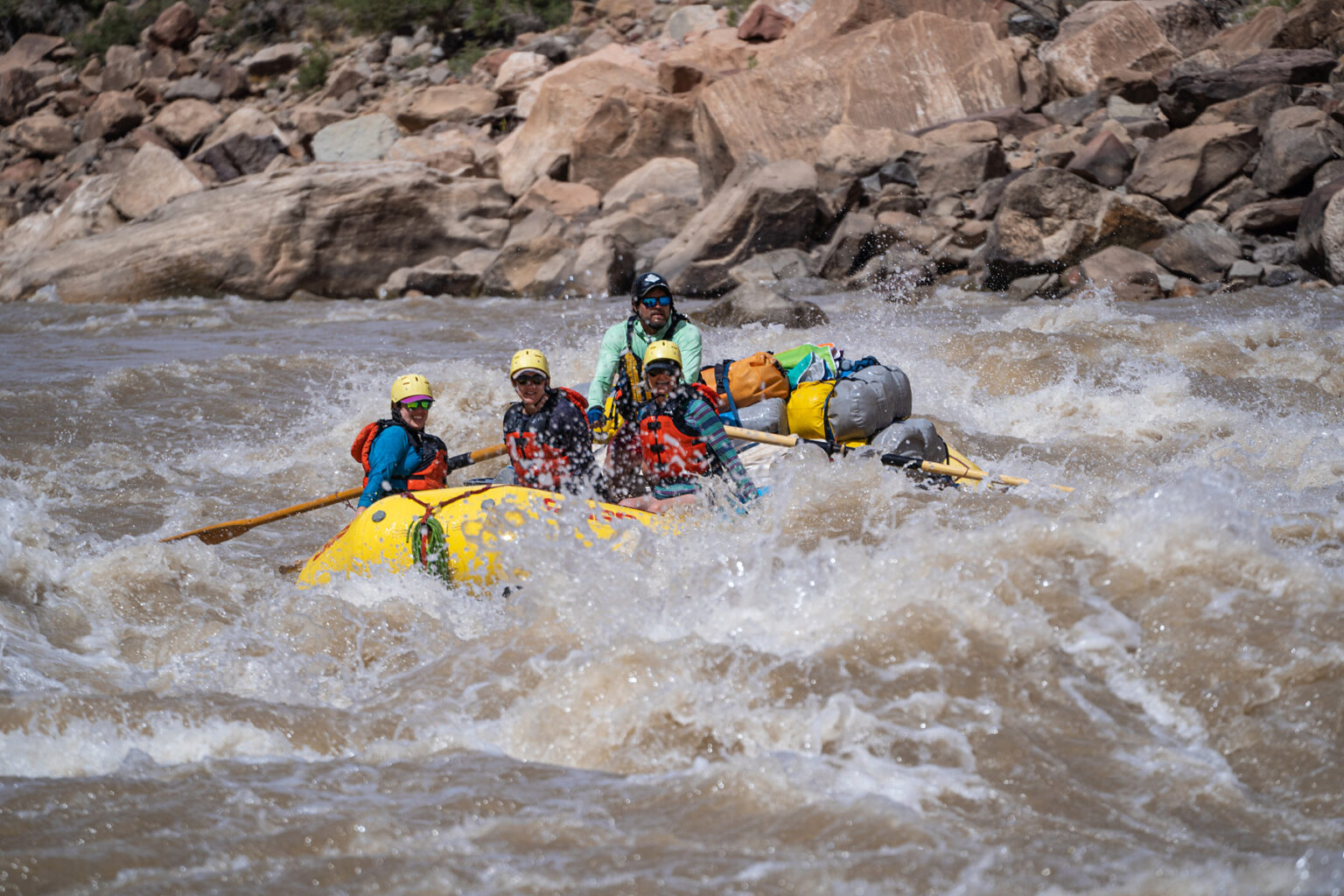
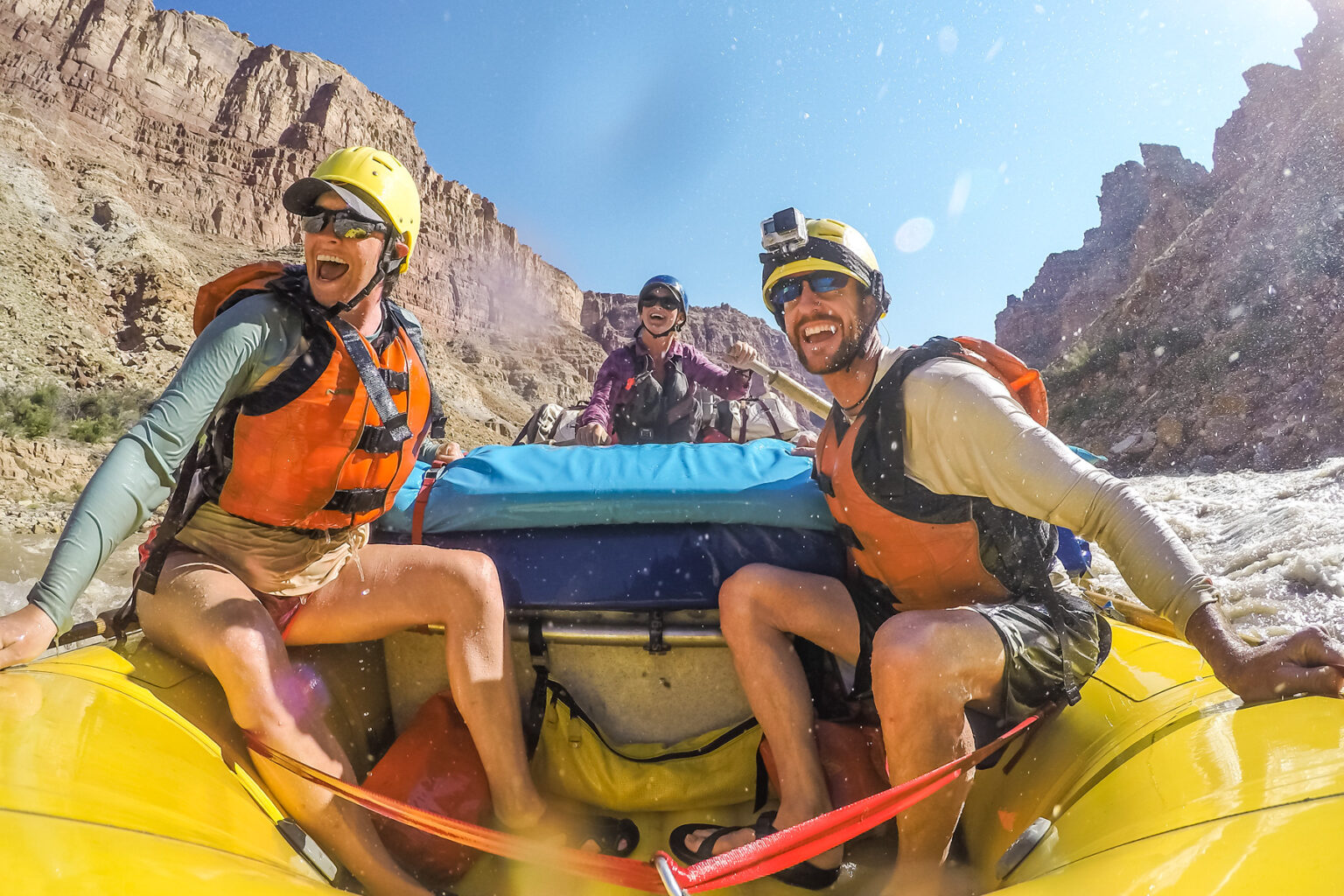
Follow in the footsteps of John Wesley Powell and retrace his historic 1869 expedition on this OARS-exclusive adventure—the most comprehensive river expedition in the American West.
In 1869, John Wesley Powell and a crew of nine men launched four wooden boats into the “Great Unknown,” seeking to map the last uncharted wilderness of the Continental United States. Today, OARS invites you to experience the definitive modern retrace of that legendary journey. Covering hundreds of river miles over six weeks, this 42-day expedition is a masterclass in logistics and a testament to the enduring spirit of exploration, made possible only by OARS’ rare and extensive collection of river permits.
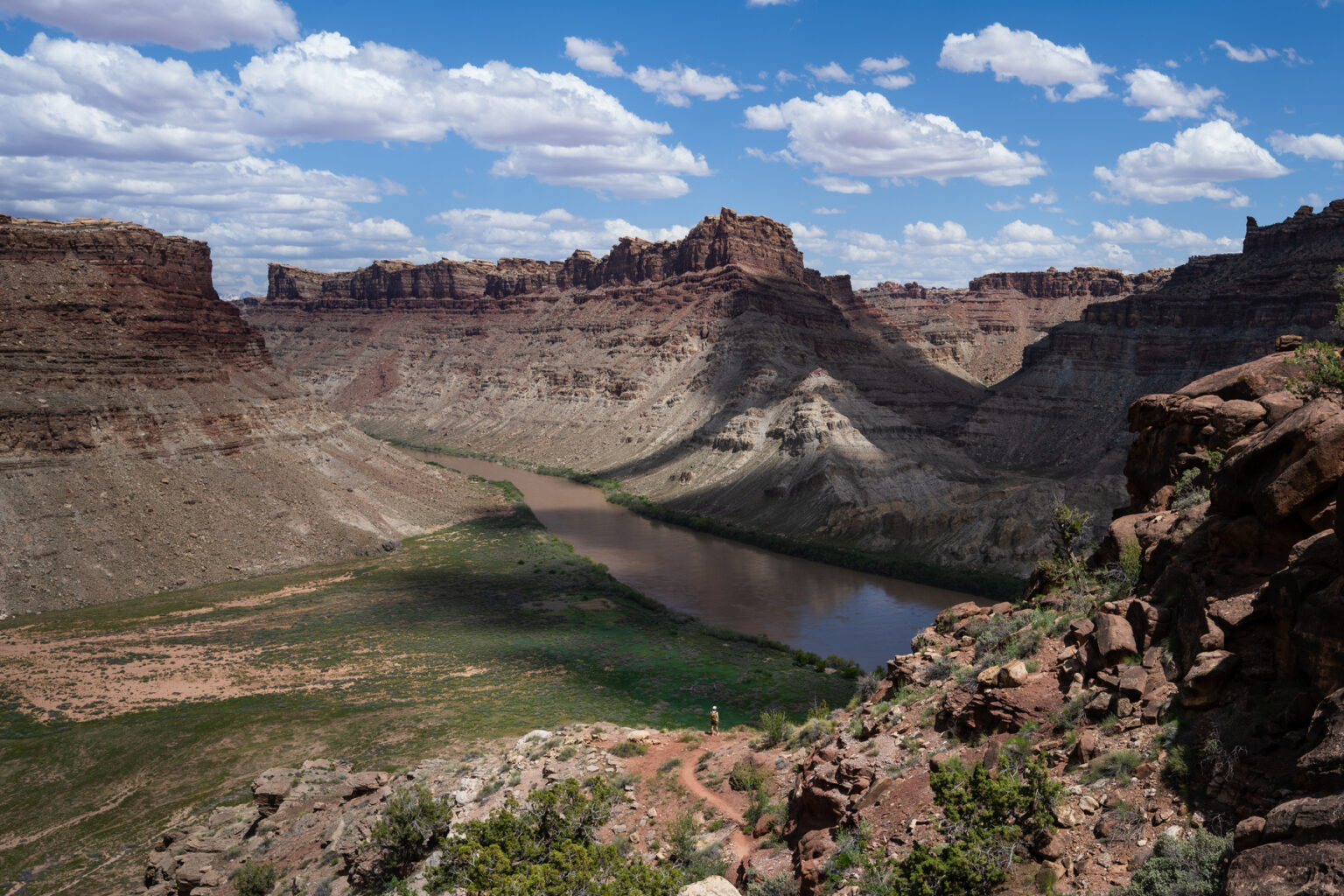
Our journey begins below Flaming Gorge Dam, where the clear, cold waters of the Green River carry us into the crimson silence of the Gates of Lodore. From there, the expedition builds in both geological grandeur and whitewater intensity. We navigate the remote wilderness of Desolation Canyon, the winding red rock solitudes of Labyrinth and Stillwater, and the legendary “Big Drops” of Cataract Canyon.
The experience culminates with the pinnacle of them all: a full, 277-mile descent of the Colorado River through Grand Canyon. From the vibrantly colored walls of Marble Canyon to the thunderous hydraulics of Lava Falls, you will traverse nearly two billion years of Earth’s history.
This is more than a rafting trip; it is a transformative immersion into the heart of the Colorado River Basin. Along the way, we balance the adrenaline of world-class whitewater with quiet hikes to Indigenous cultural sites, hidden waterfalls, and the places where Powell’s crew left their mark over 150 years ago. Reserved for the modern explorer, this 42-day journey is a once-in-a-lifetime opportunity to claim your own piece of river history.
Trip Highlights
What to Expect
Itinerary & Map
Itinerary at a Glance
We pride ourselves in running a relaxed and flexible schedule. Every John Wesley Powell Retrace trip is different, depending upon the group, other trips on the water, camp locations, and sometimes the weather. The following is a sample of what your trip might be like:
The Day Before Your Trip | May 24
Arrive in Vernal, UT and check in to the Dinosaur Inn (after 4 p.m.). Accommodations this evening are included in the trip cost. This evening, we’ll meet at the OARS warehouse for a pre-trip orientation. You’ll meet your fellow travelers and trip leader, review important details, and receive your waterproof river bags to pack for the journey ahead.
Day 1 | May 25
We begin our trip with a scenic drive from Vernal to our put-in below the Flaming Gorge Dam, where the boats and the rest of the OARS crew await. After a detailed safety talk, our journey begins.
“Today we have an exciting ride, and make almost railroad speed. Here and there the water rushes into a narrow gorge; rocks roll it into great waves, and the boats go leaping and bounding like things of life.” — J.W. Powell, June 1, 1869
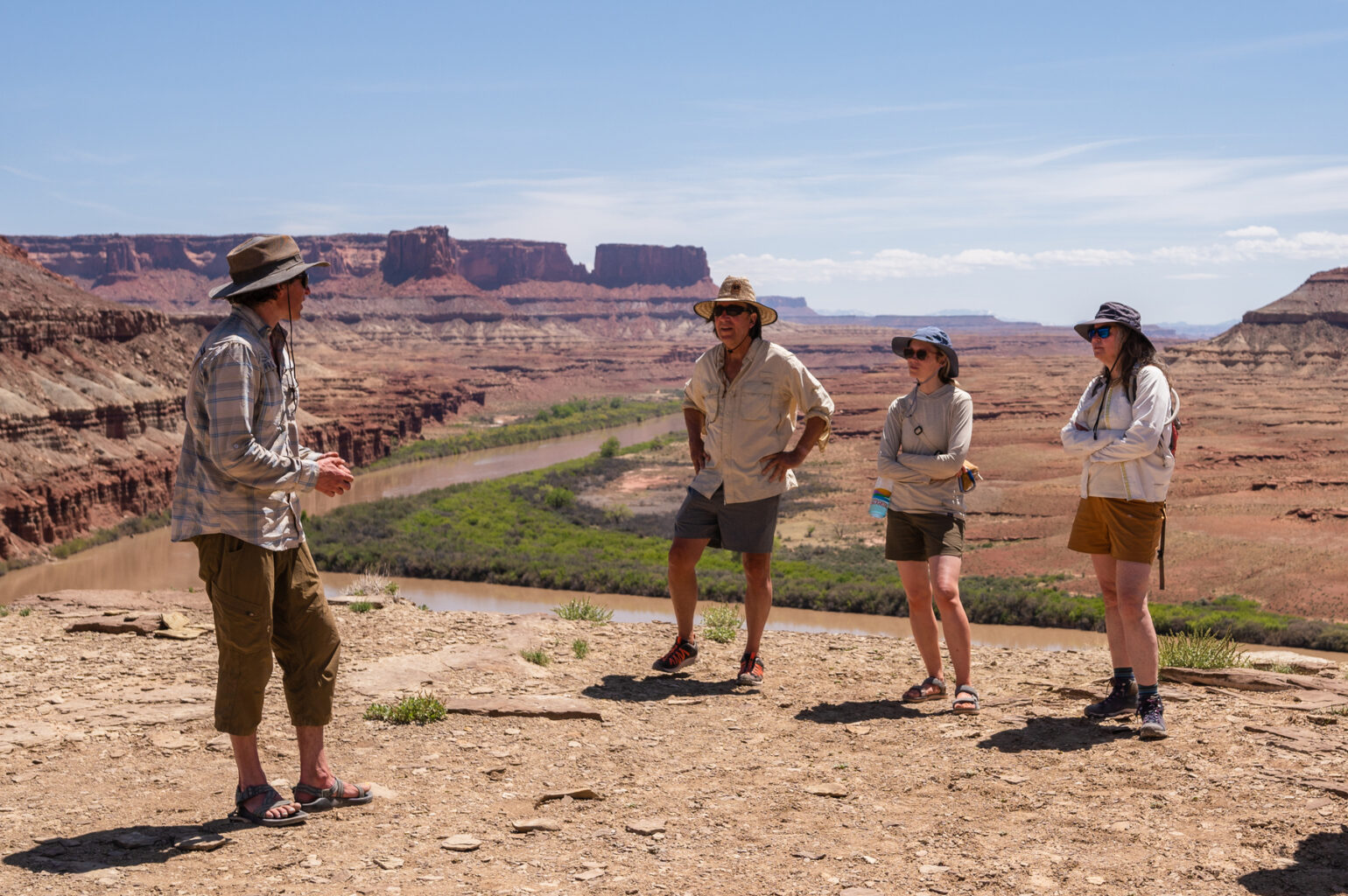
The first day delivers fun whitewater right away—Anticipation, Roller Coaster, and Mother-in-Law Rapids—as the clear waters of the Green River carry us into Ashley National Forest. Our first day sets the pace for the rest of our time on the river. Typically, we spend a few hours on the water in the morning, sometimes stopping for a great hike or a refreshing swim.
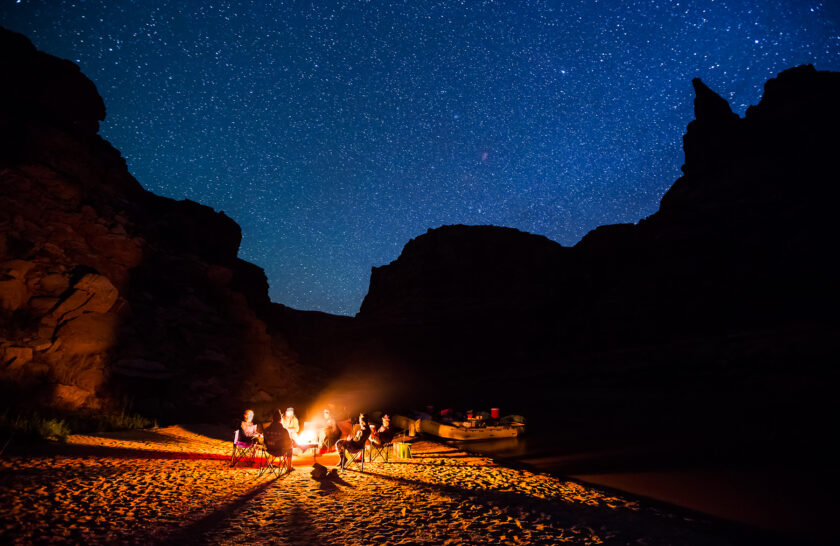
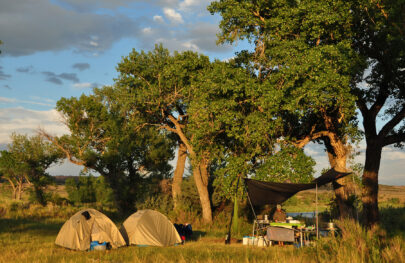
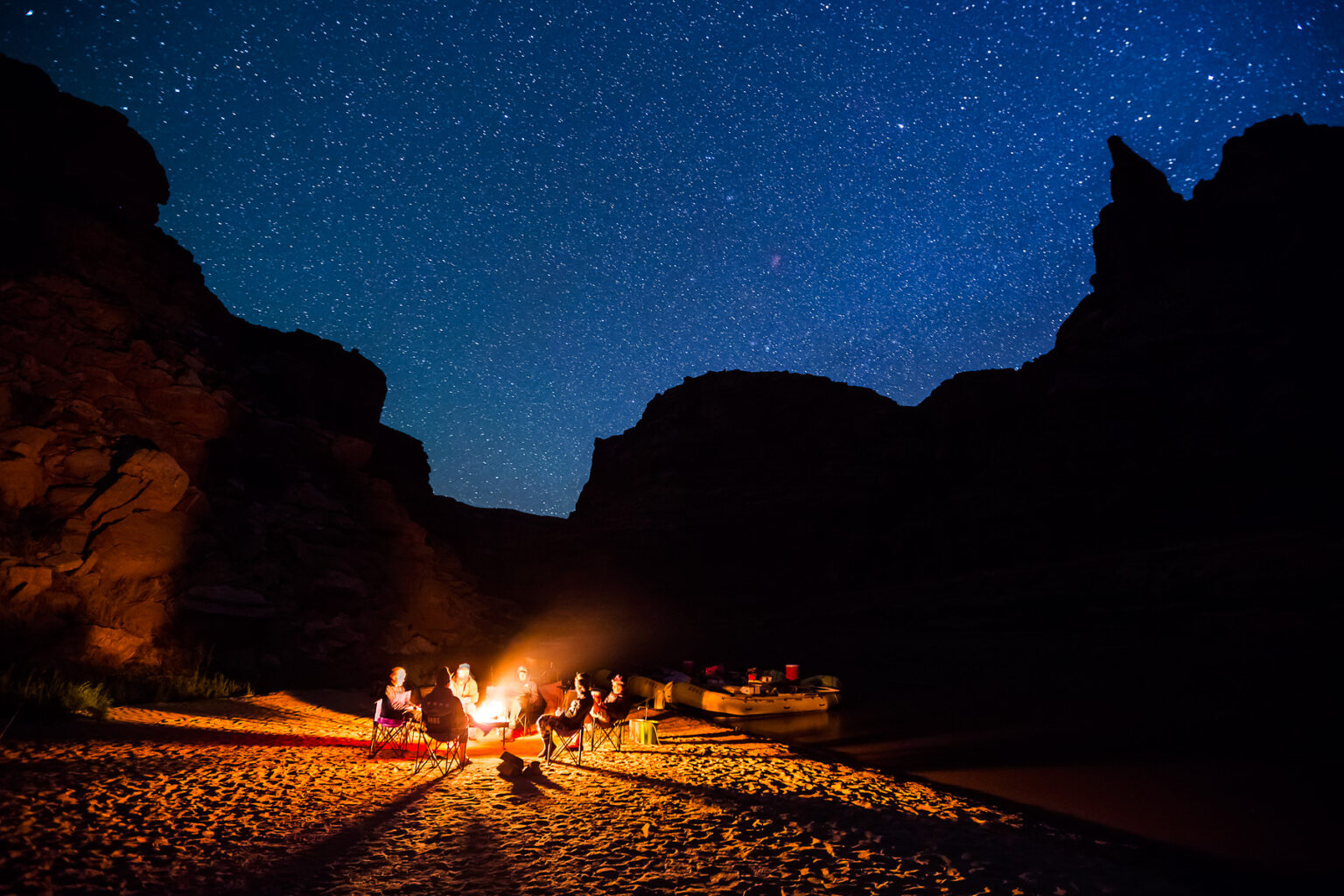
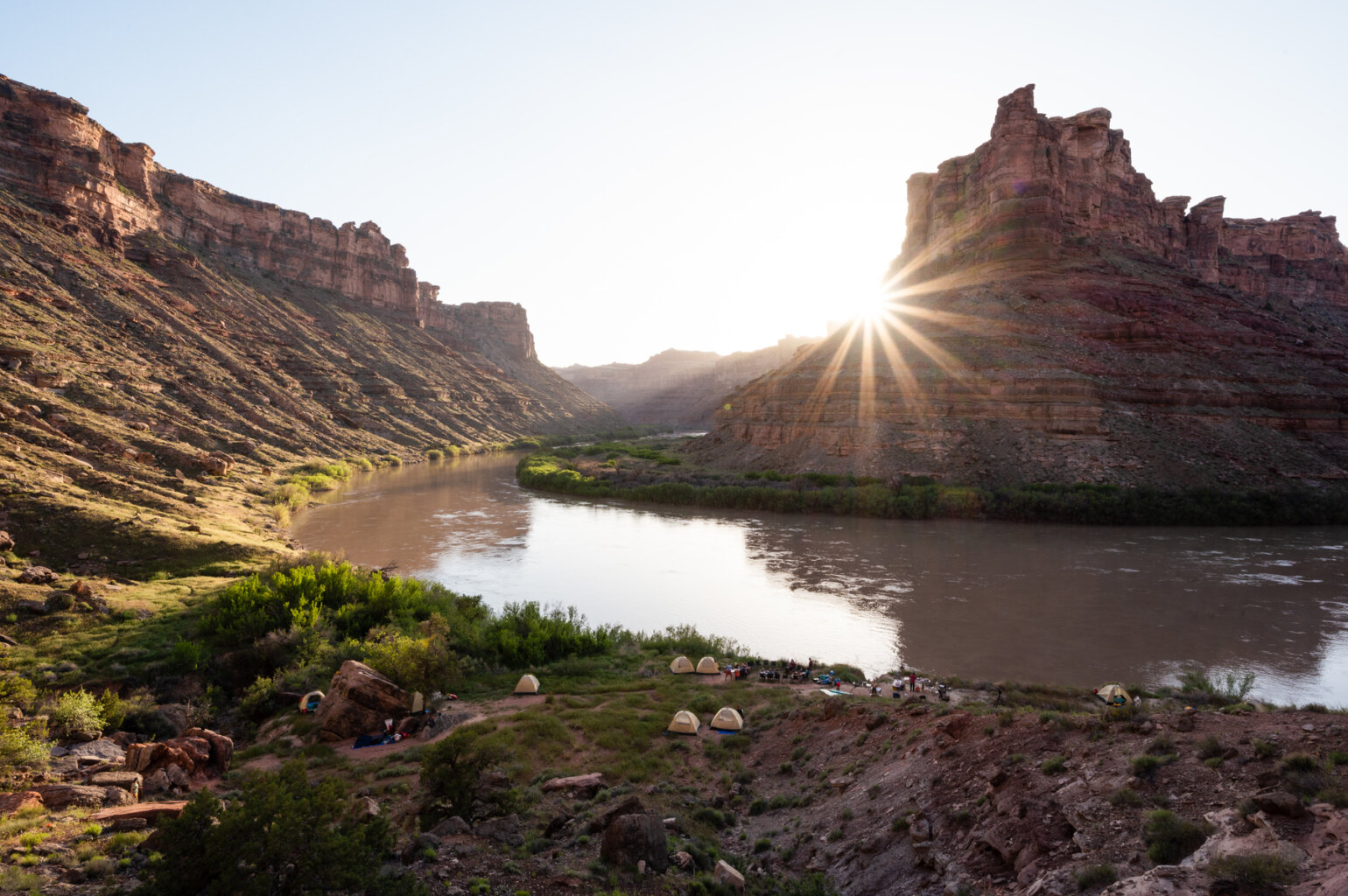
At lunchtime, we pull over to enjoy a delicious picnic. After feasting and relaxing (or perhaps a game of Frisbee), we get back in our boats and watch the desert panoramas slowly develop between bursts of thrilling whitewater. By mid- to late afternoon, we make camp. You’ll grab your bags and set up your tent while the guides take care of the kitchen and the “living room” camp chair circle. After settling in, relax on the beach, explore nearby, or unwind while the guides prepare hors d’oeuvres and dinner. Evenings unfold around the fire (if permitted), with stories, laughter, and quiet moments under a vast, star-filled sky.
Days 2 – 3 | May 26 – 27
Mornings begin with fresh coffee and tea waiting for you when you get up, followed by a hearty breakfast before we break camp and continue downstream. Back on the water, we’ll pass through Flaming Gorge as swift currents carry us through Swallow Canyon and into Browns Park National Wildlife Refuge. We’ll visit the historic Jarvie Ranch, a restored site offering a glimpse into turn-of-the-century pioneer life.
“Brown’s Park is a valley, bounded on either side by a mountain range, really an expansion of the canyon.” J.W. Powell, June 1869
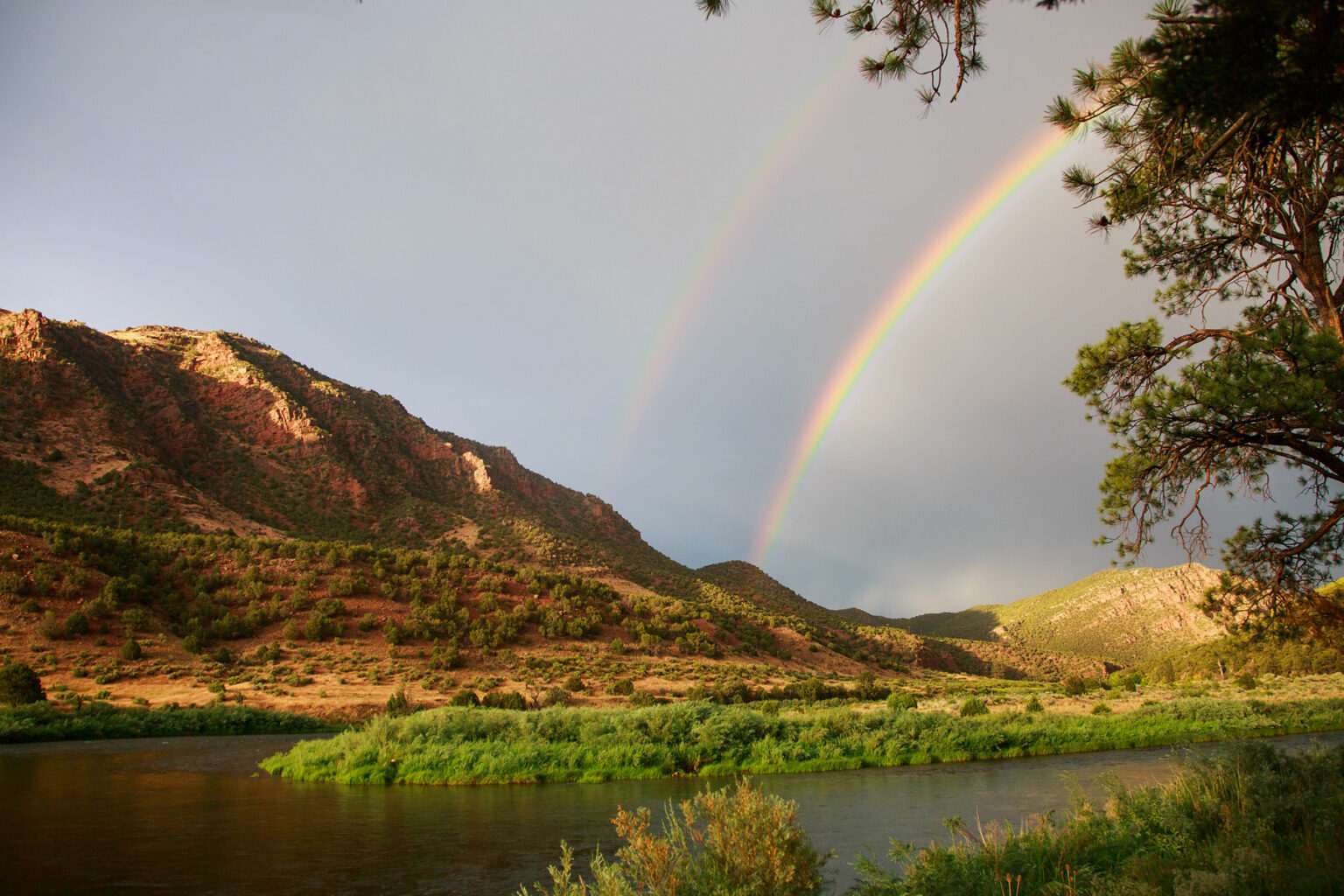
Evenings find us camped among pines and junipers, with time to hike and relax, followed by another delicious riverside dinner, good conversation, and laughter.
Days 4 – 7 | May 28 – 31
Entering Dinosaur National Monument and the Gates of Lodore, the pace quickens with Winnie’s Rapid and Upper and Lower Disaster Falls—named after Powell lost a boat and innumerable provisions here during his 1869 journey.
“As Ashley and his party were wrecked here, and as we have lost one of our boats, we adopt the name Disaster Falls for the scene of so much peril and loss.” J.W. Powell, June 12, 1869
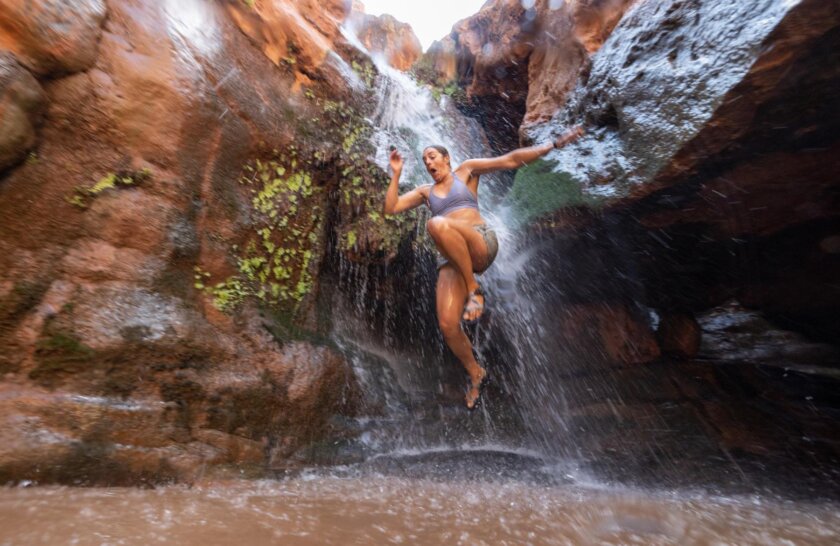
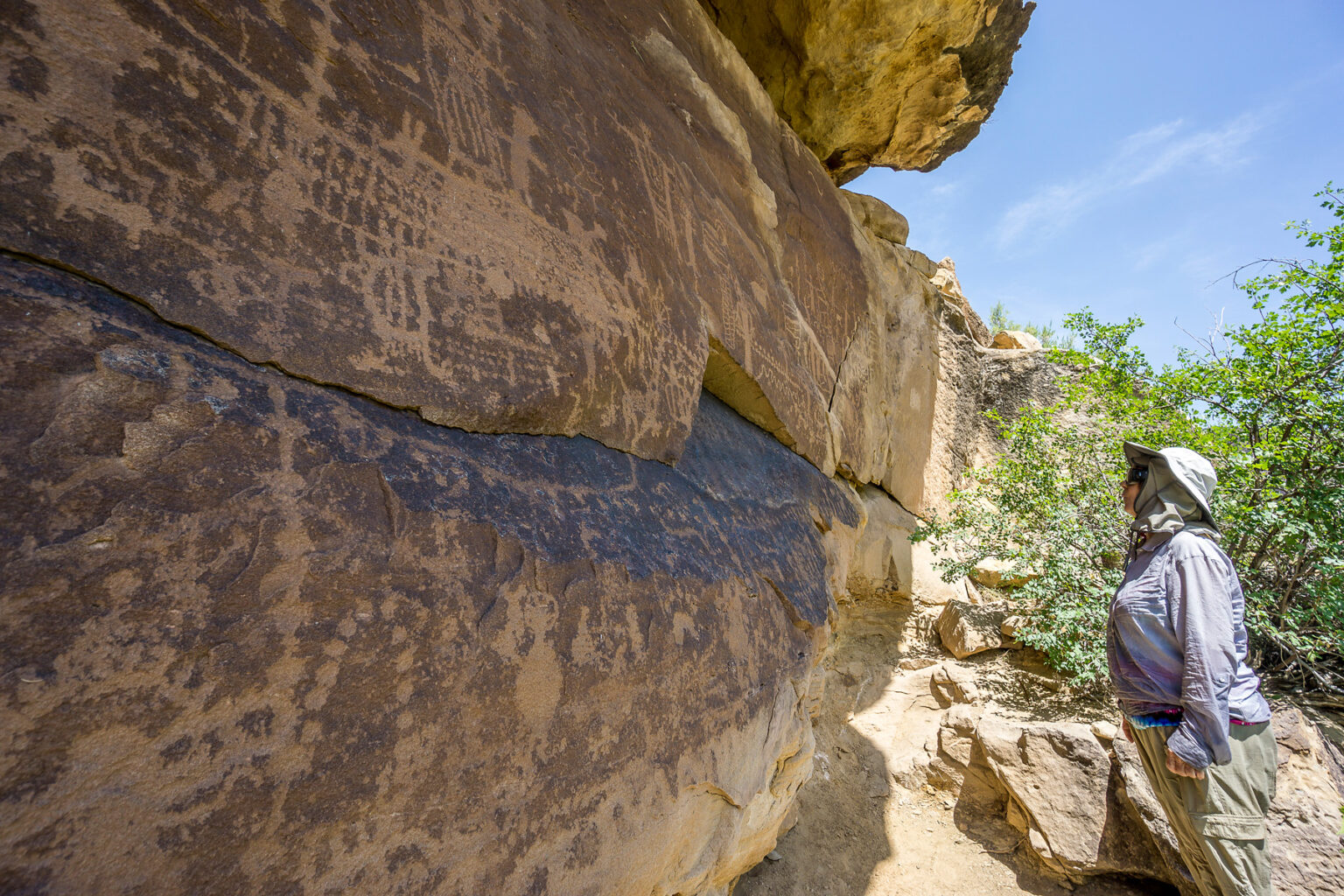
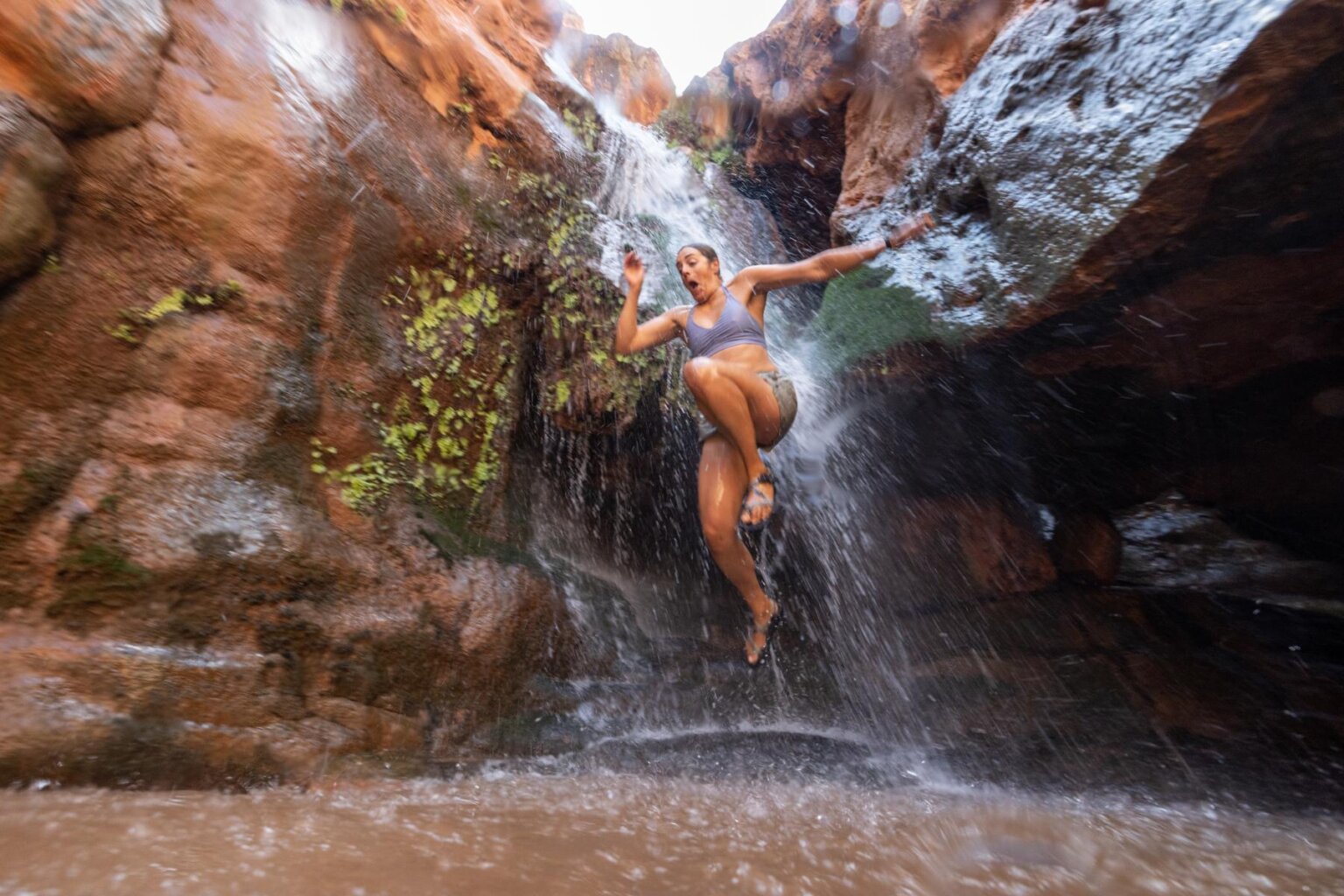
Harp Falls, Triplet Falls, and Hell’s Half Mile add to the excitement, balanced by calmer stretches through Lodore’s soaring red rock cliffs sprinkled with deep green junipers and pinyon pines. As we explore Lodore, we may hike to Rippling Brook, a spring-fed waterfall that provides a refreshing shower. Below the Yampa River confluence, we circle Steamboat Rock into Echo Park, with opportunities to visit Fremont-era petroglyphs or hike to Whispering Cave, passing magnificent sandstone formations along the way.
Further downstream, we travel through some of the oldest exposed rock in the Southwest where geologic layers reveal hundreds of millions of years of Earth’s history. In Whirlpool Canyon, we may hike up Jones Hole Creek to remarkably well-preserved prehistoric rock art panels.
“What a view! The river cuts the mountain to its center, splitting the ridge for six miles, then turns out of it. All this we see where we stand on the summit, and so we name the forge below Split Mountain Canyon.” J.W. Powell, June 24, 1869
Entering Split Mountain Canyon, the river steepens and delivers four major rapids before our first take-out. From here, we return to Vernal for a shower, dinner, a comfortable night at the Dinosaur Inn, and a chance to recharge.
Days 8 – 13 | June 1 – 6
Regrouping for the drive to Sand Wash, we meet our crew to begin the Desolation Canyon leg. This stretch begins calmly, often with motor assist to cover distance. Along the way, we pass through 40 million years of geologic time and a remote wilderness that hides ancient Fremont-era petroglyphs and abandoned ranches once used by Butch Cassidy’s Wild Bunch.
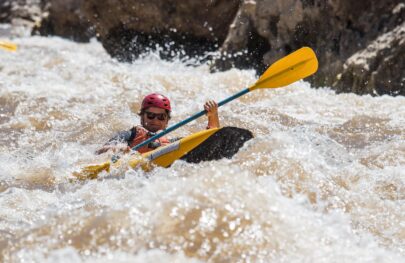
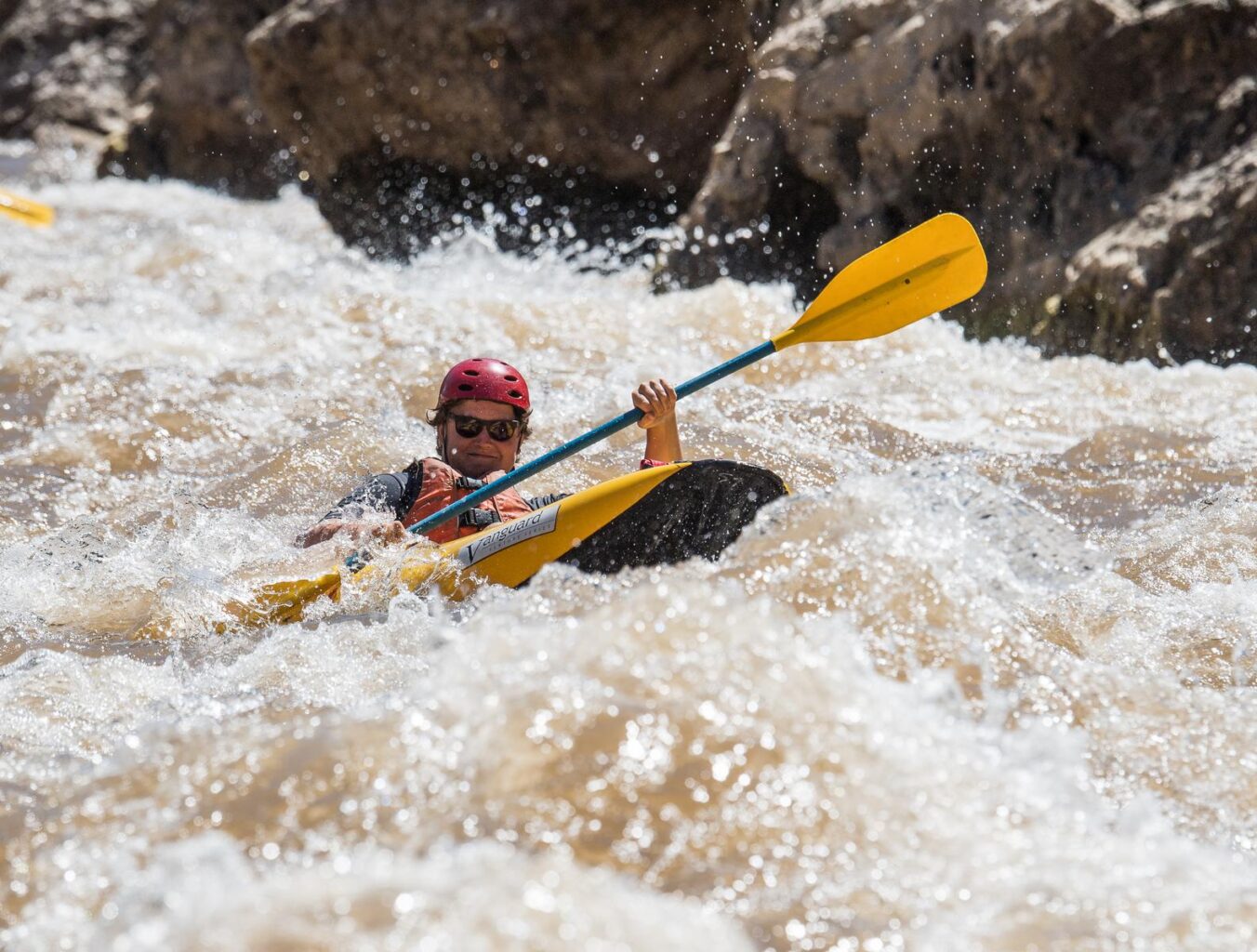
The river’s pace quickens daily, offering ample opportunities to paddle an inflatable kayak through this section’s fun, bouncy riffles. We’ll conquer the canyon’s most thrilling whitewater at Joe Hutch, Three Fords, and Coal Creek Rapids. Our camps in Deso are set in shaded cottonwood groves with access to rugged hiking trails and open space to explore.
Days 14 – 20 | June 7 – 13
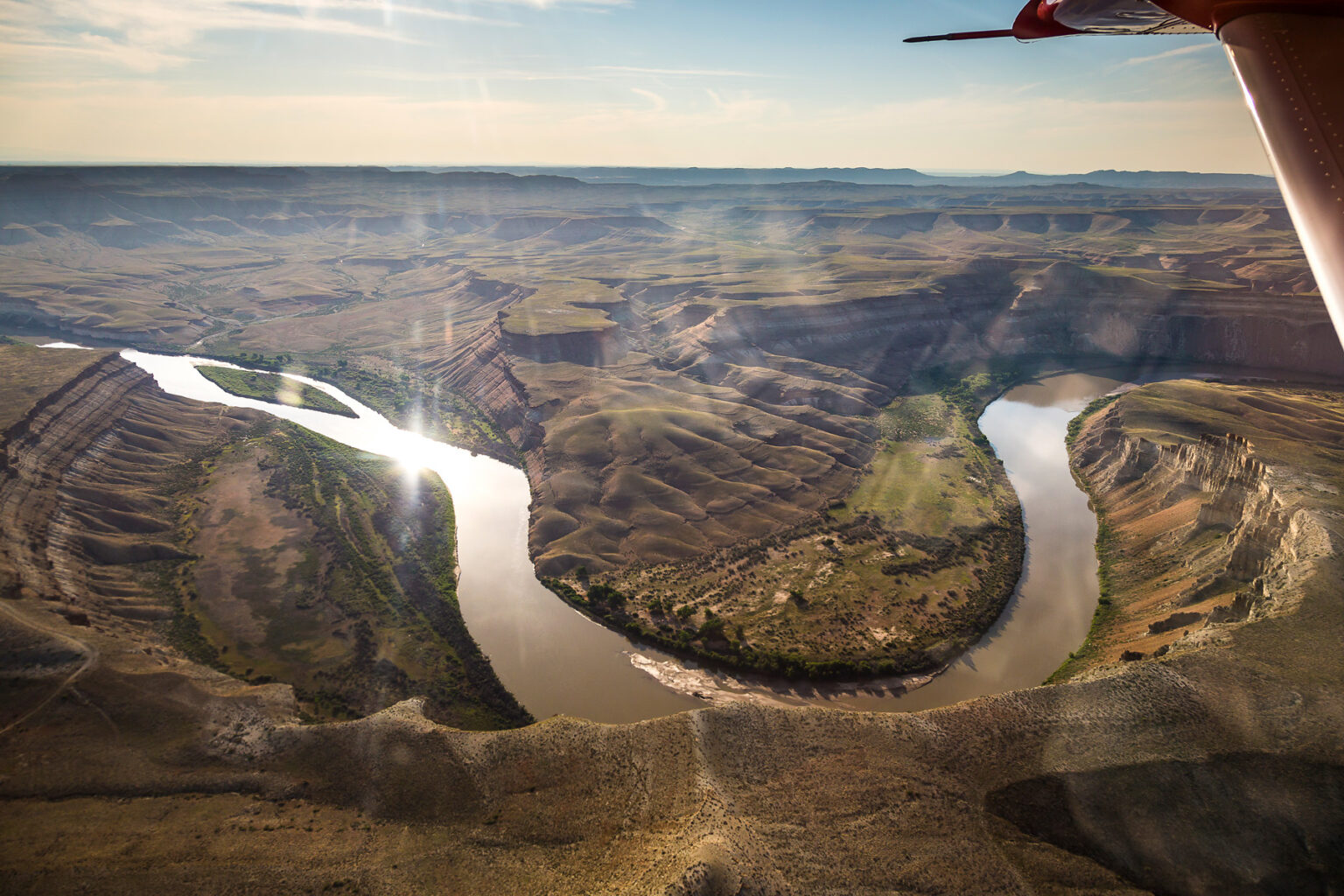
Two weeks in, we reach Swasey’s Boat Ramp where lunch will be waiting for us on arrival. After lunch, we’ll drive to Green River, Utah for a visit to the John Wesley Powell River History Museum, errands and dinner at a local restaurant. This evening, we’ll camp at Green River State Park. Continuing downstream, we travel through the convoluted twists and turns of Labyrinth and Stillwater Canyons, exploring a maze of side canyons and hidden gorges.
“We continue on our journey. In many places the walls, which rise from the water’s edge, are overhanging on either side. The stream is still quiet, and we glide along through a strange, weird, grand region.” — J.W. Powell, July 17, 1869
We may venture into places like Three Canyon, hike to the River Post Office, or wander into Two Mile Canyon, Fort Bottom, Shot, or Water Canyon. Along the way, there are opportunities to visit ancient granaries, thousand-year-old structures, intricate petroglyphs, and the inscription of Denis Julien—an explorer who passed through here even before Powell and his crew.
Days 21 – 24 | June 14 – 17
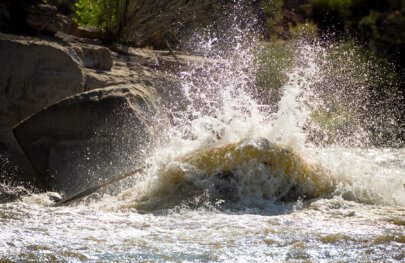
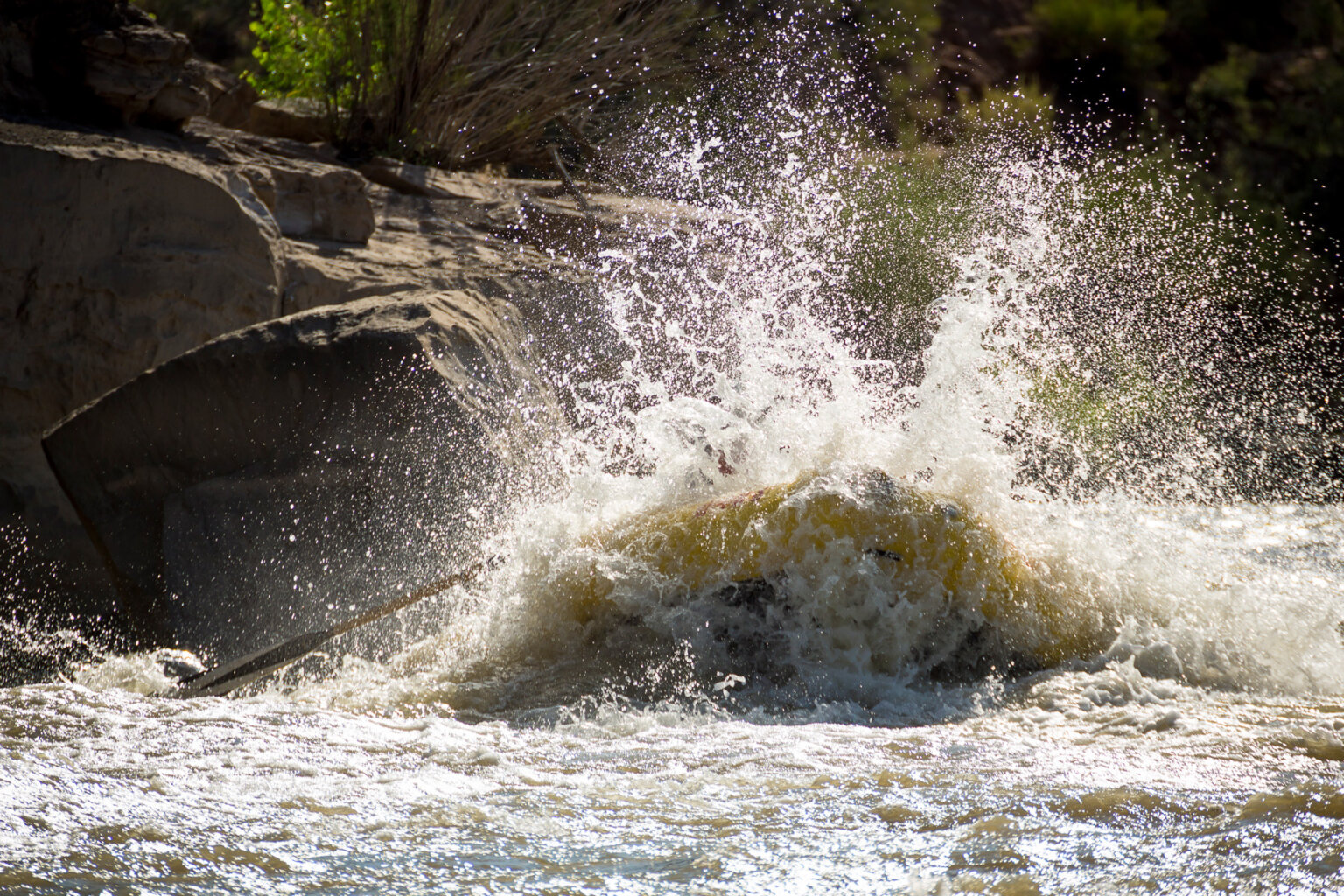
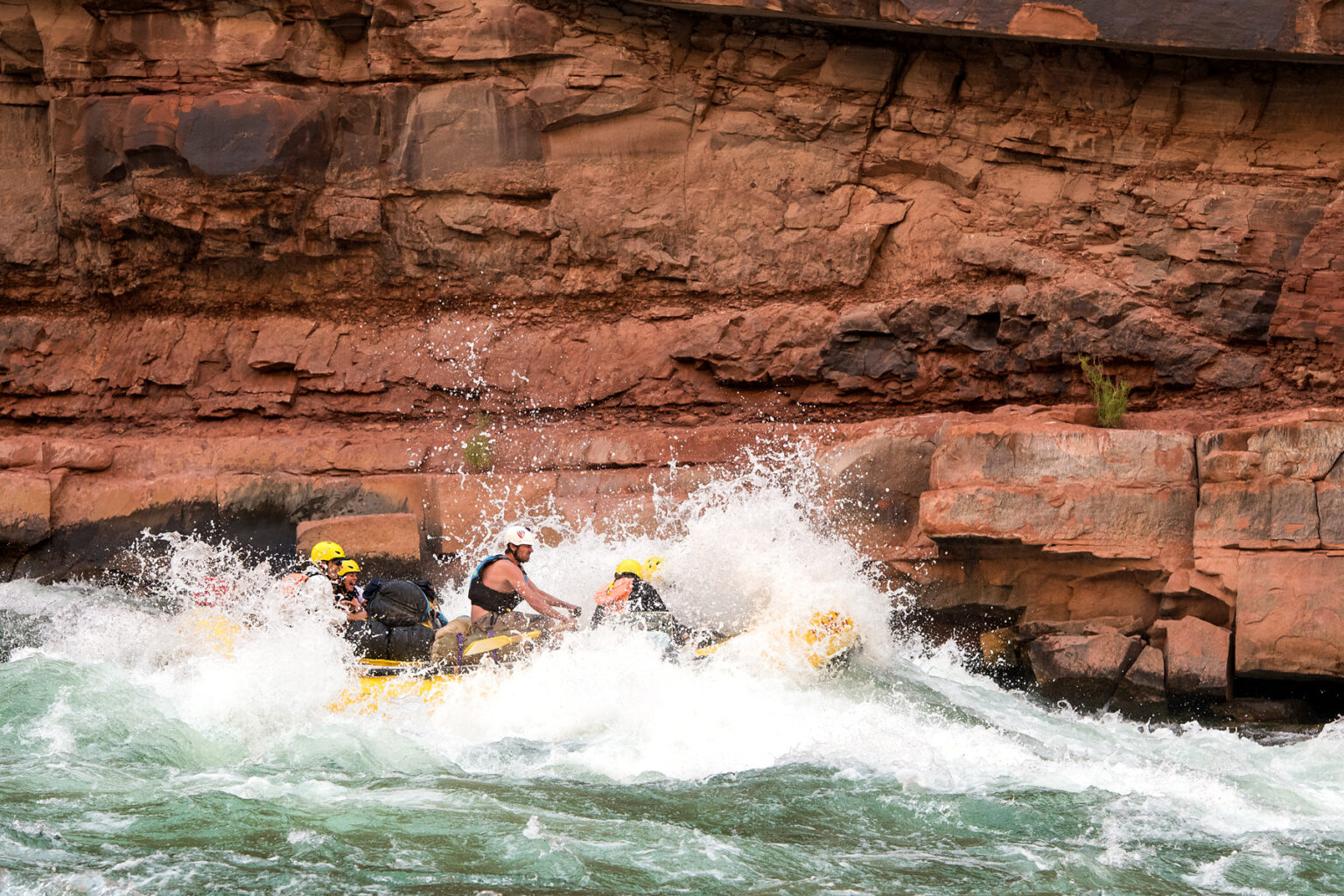
After days tracing the Green River through winding desert canyons, we reach the confluence of the Green and Colorado Rivers. Below the confluence, the character of the river shifts. The current quickens, the canyon deepens, and the anticipation builds as we enter Cataract Canyon. Here, legendary rapids like Mile Long, Capsize, and the Big Drops deliver wave after wave of adrenaline. Depending on water levels, this stretch can range from splashy and technical to full-on, rollercoaster rides through towering hydraulics.
“On starting we come at once to difficult rapids and falls, that in many places are more abrupt than in any of the canyons through which we have passed, and we decide to name this Cataract Canyon.” — J.W. Powell, July 23, 1869
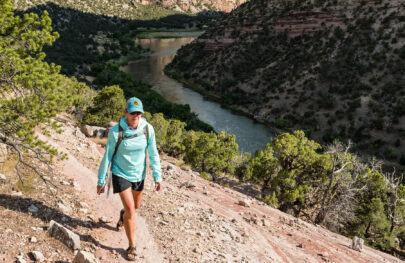
Over the next couple of days, we balance big whitewater with time to explore on foot—hiking into side canyons, scrambling up slickrock benches, and taking in sweeping views of this remote landscape. As we move into Lower Cataract Canyon within Glen Canyon National Recreation Area, the river begins to change once again. Until recently, much of this stretch lay beneath the waters of Lake Powell. As lake levels have receded, new rapids, side canyons and beaches long submerged are re-emerging, revealing a landscape in transition.
We’ll take time here to explore newly exposed places like Bowdie, Clearwater, and Dark Canyons—walking through evolving ecosystems, tracing fresh sediment lines on canyon walls, and witnessing firsthand how the river is reclaiming its course.
Days 25 – 26 | June 18 – 19
At the former Hite Settlement, we take a scenic flight to Page, AZ, where an OARS shuttle awaits. After time for errands, we transfer to Marble Canyon for dinner and a night at a comfortable lodge. The next day includes breakfast, an upriver tour from Lees Ferry, followed by lunch back in Marble Canyon, and a free afternoon to do laundry and prep for the epic 277-mile descent of the Grand Canyon.
Days 27 – 41 | June 20 – July 4
“We are now ready to start our way down the Great Unknown… We have an unknown distance to run, an unknown river to explore. What falls there are, we know not; what rocks beset the channel; we know not; what walls rise over the river; we know not. Ah, well! We may conjecture many things.” — J.W. Powell, August 13, 1869
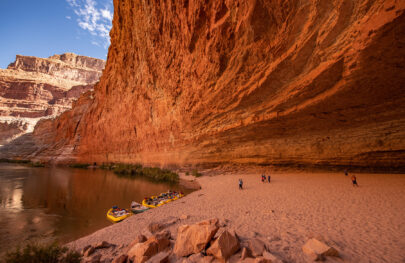
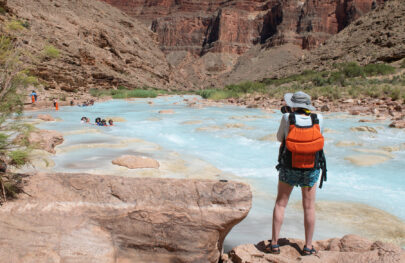
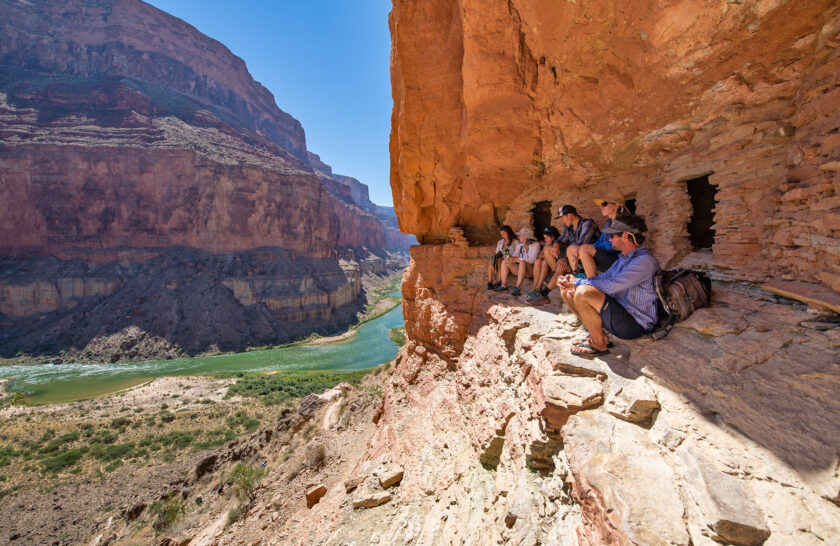
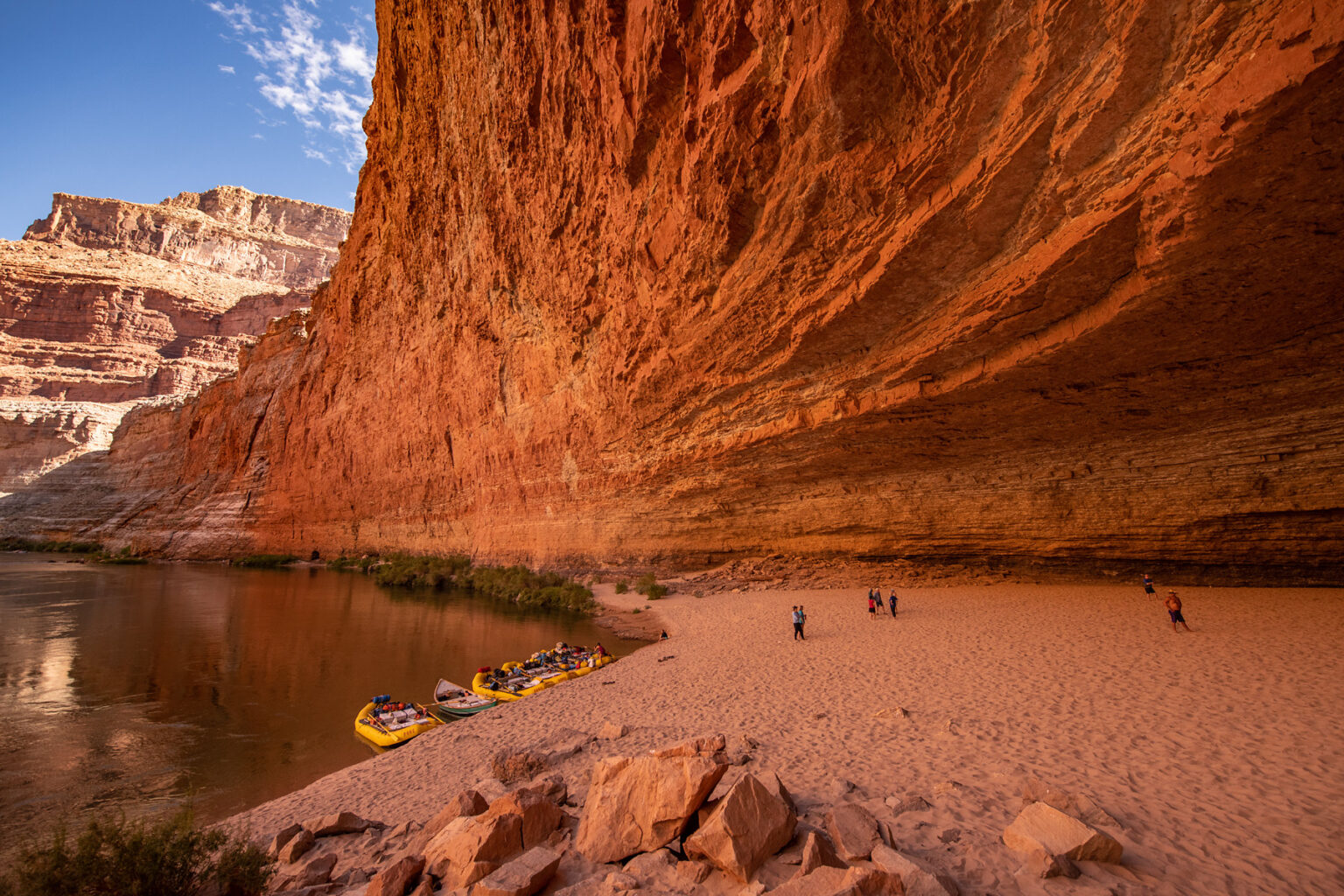
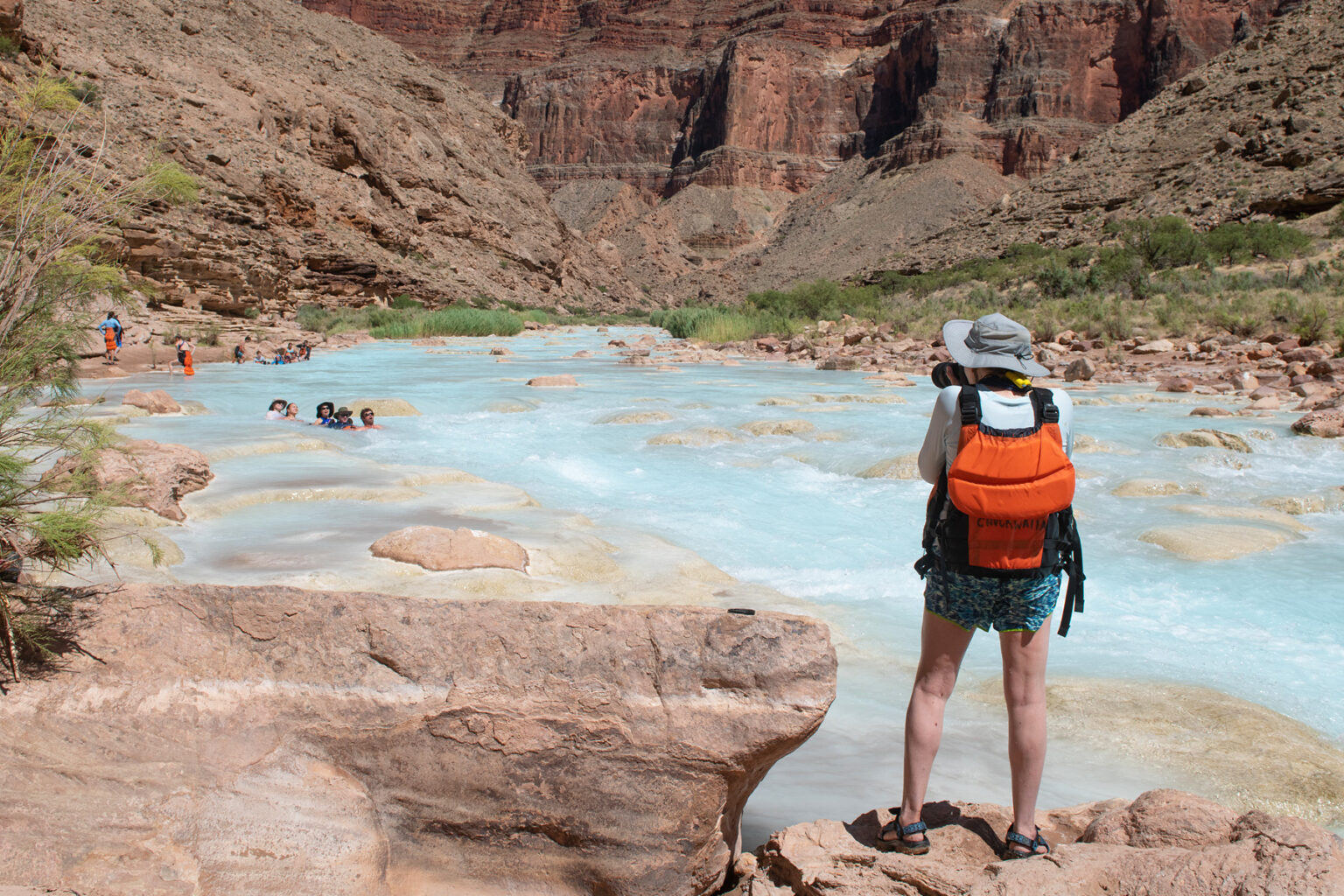
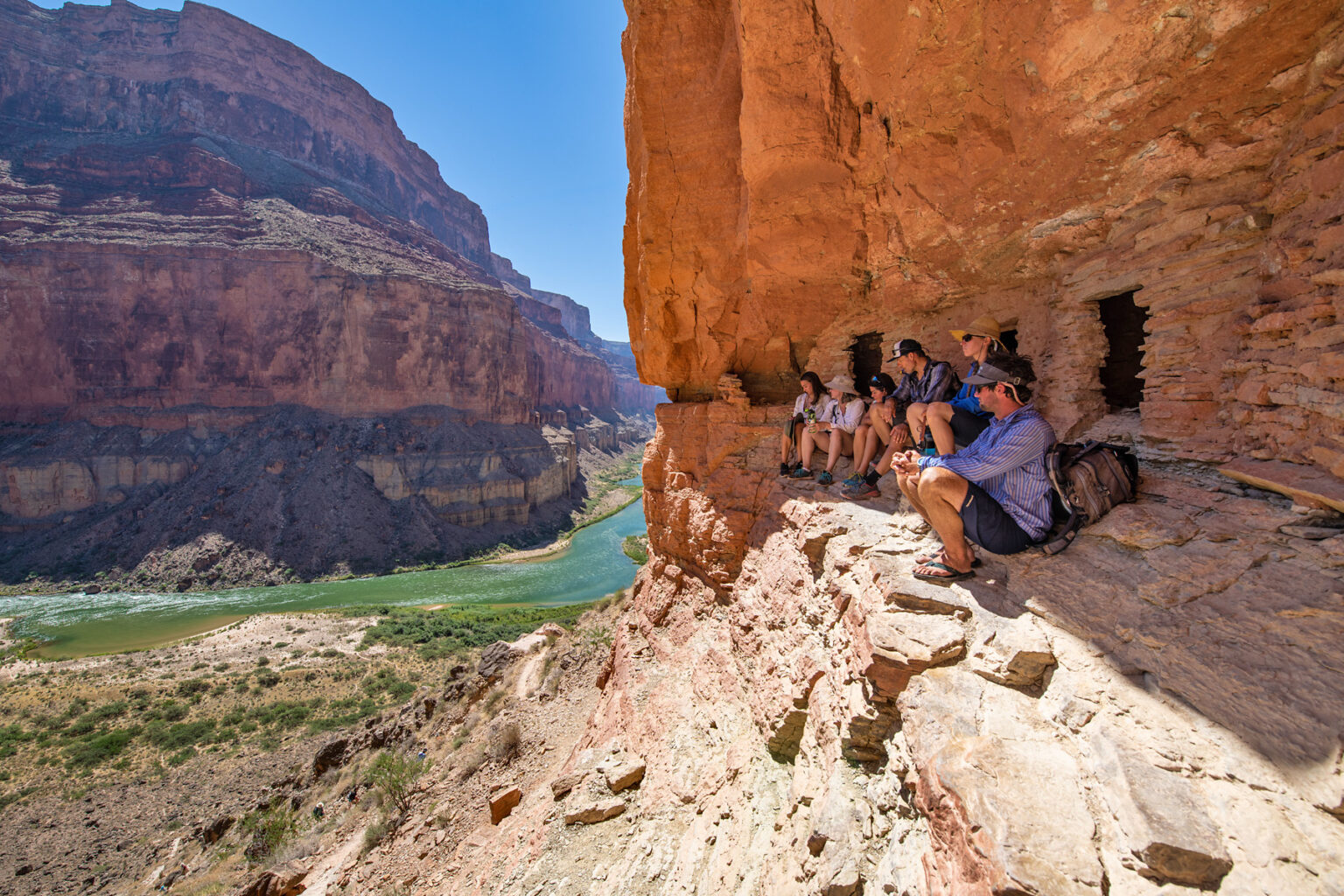
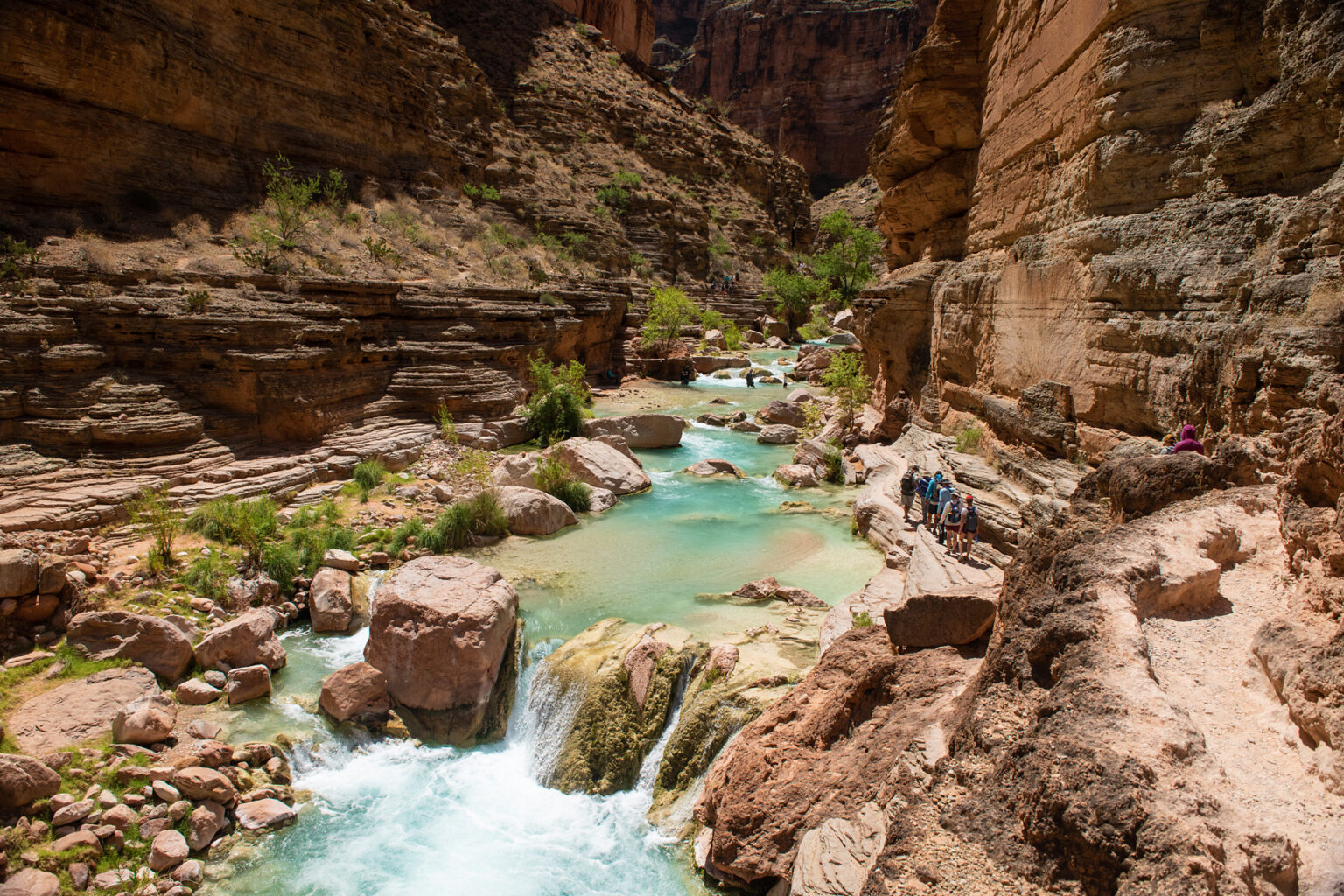
Launching from Lees Ferry, the next two weeks take us through one of Earth’s greatest masterpieces. The first miles through Marble Canyon reveal vibrant limestone cliffs and the initial thrills of Badger and Soap Creek rapids. We’ll explore the vast, cool sanctuary of Redwall Cavern and the fossil-rich floor of Nautiloid Canyon before climbing to the Nankoweap granaries for a sweeping view of the river winding below. If conditions align, the Little Colorado flows a brilliant turquoise, inviting a refreshing swim.
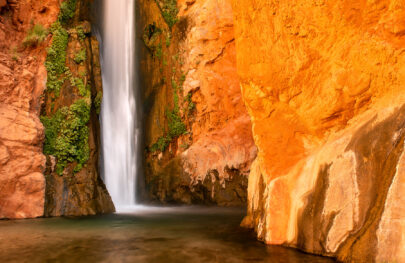
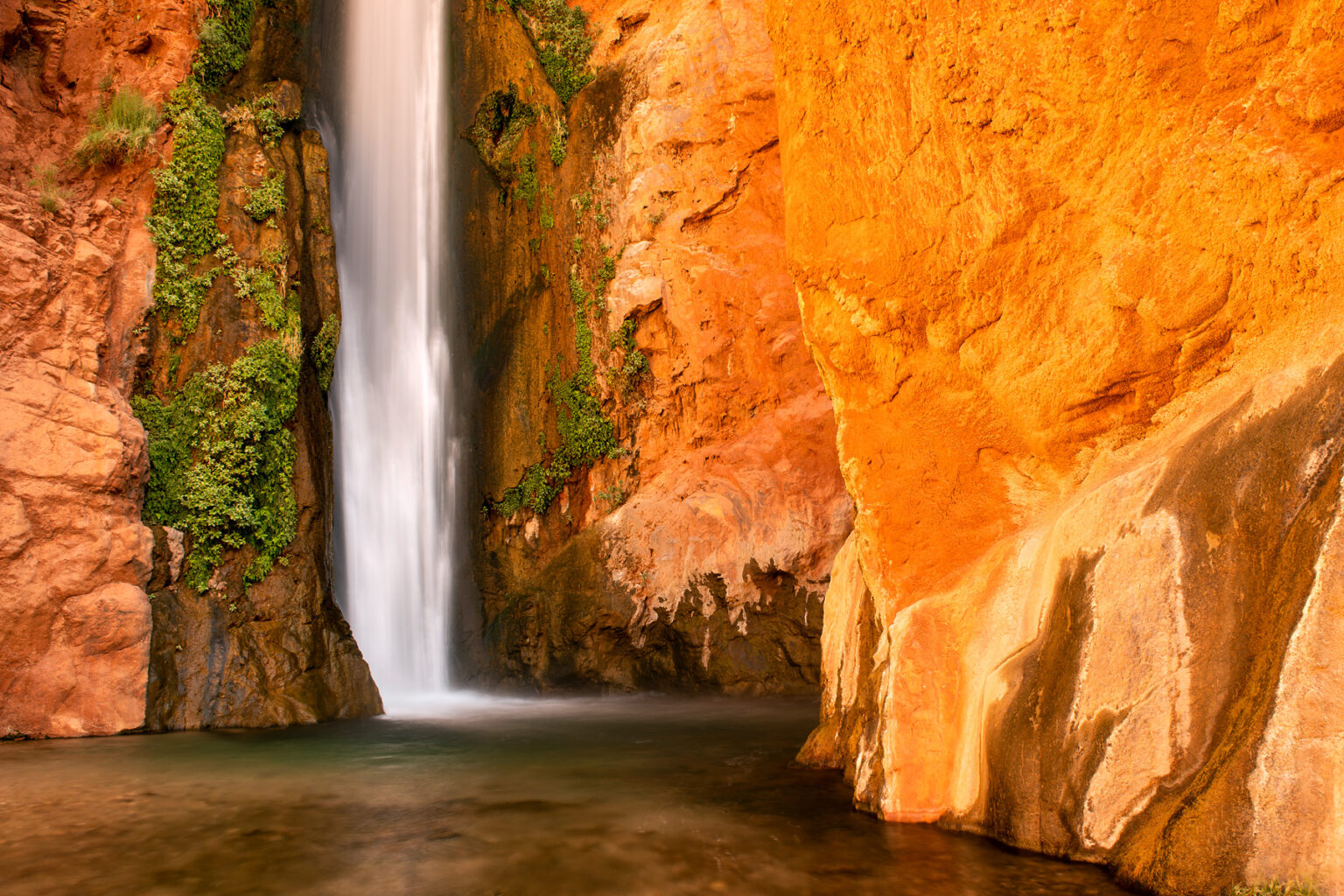
Entering the Inner Gorge, the canyon walls shift to jet-black schist and the waves build in Hance, Sockdolager, and Grapevine. We take on the “Jewels”—Crystal, Sapphire, and Ruby—then balance the intensity with time at Elves Chasm’s emerald pools and the 174-foot cascade of Deer Creek Falls. Along the way, we peer into the Great Unconformity at Blacktail Canyon, navigate the narrow slot of Matkatamiba Canyon, and run the legendary Lava Falls.
Our final days are spent discovering the hidden gems of the lower canyon, from the fluted walls of Granite Narrows to the splashy, fun-filled rapids of the lower Granite Gorge, soaking in the last miles of an unforgettable journey.
Day 42 | July 5
After an early breakfast, a jet boat transfers us to Pearce Ferry on Lake Mead (about a 1-hour, 40-minute ride). From there, vans will shuttle us to the DoubleTree Hotel in Flagstaff, typically arriving early-afternoon. We’ll gather this evening for a farewell dinner. Final night accommodations are included. Departures are recommended for the following day (July 6).
Meeting Time & Place
Location
Vernal, UT
Meeting time
5:00 PM, the evening before your trip
Return
Flagstaff, AZ
Trip Map
Dates & Prices
Save $800 on 2027 departures when you’re one of the first to book and request “Premier Pricing” over the phone + see below for more ways to save!
Flaming Gorge – Pearce Ferry
| 2027 Departures | Price |
|---|---|
| May 25 – July 5 | $20,799 |
DEPOSIT:
• First deposit: $2,500 per person (due at the time of booking)
• Second deposit: $2,500 per person (due by November 1 of the year before your trip)
Additional Costs:
• $15 Dinosaur National Monument entrance fee
• $40 BLM fee
• $20 GCNP entrance fee
• Single Supplement: $500
• Mandatory emergency medical & evacuation coverage
Prices subject to National Park Service review
The Need-to-Know Info
Trip Details
Included in Your Trip Cost
Not Included in Your Trip Cost
- Transportation to Vernal, UT and from Flagstaff, AZ
- Any pre- and post-trip accommodations and meals not outlined in the detailed itinerary
- Pre- and post-trip meals
- $15 Dinosaur National Monument entrance fee
- $40 BLM fee
- $20 GCNP entrance fee
- Insurance of any kind, including a travel protection plan or mandatory emergency medical & evacuation coverage
- Alcoholic beverages
- Gratuities
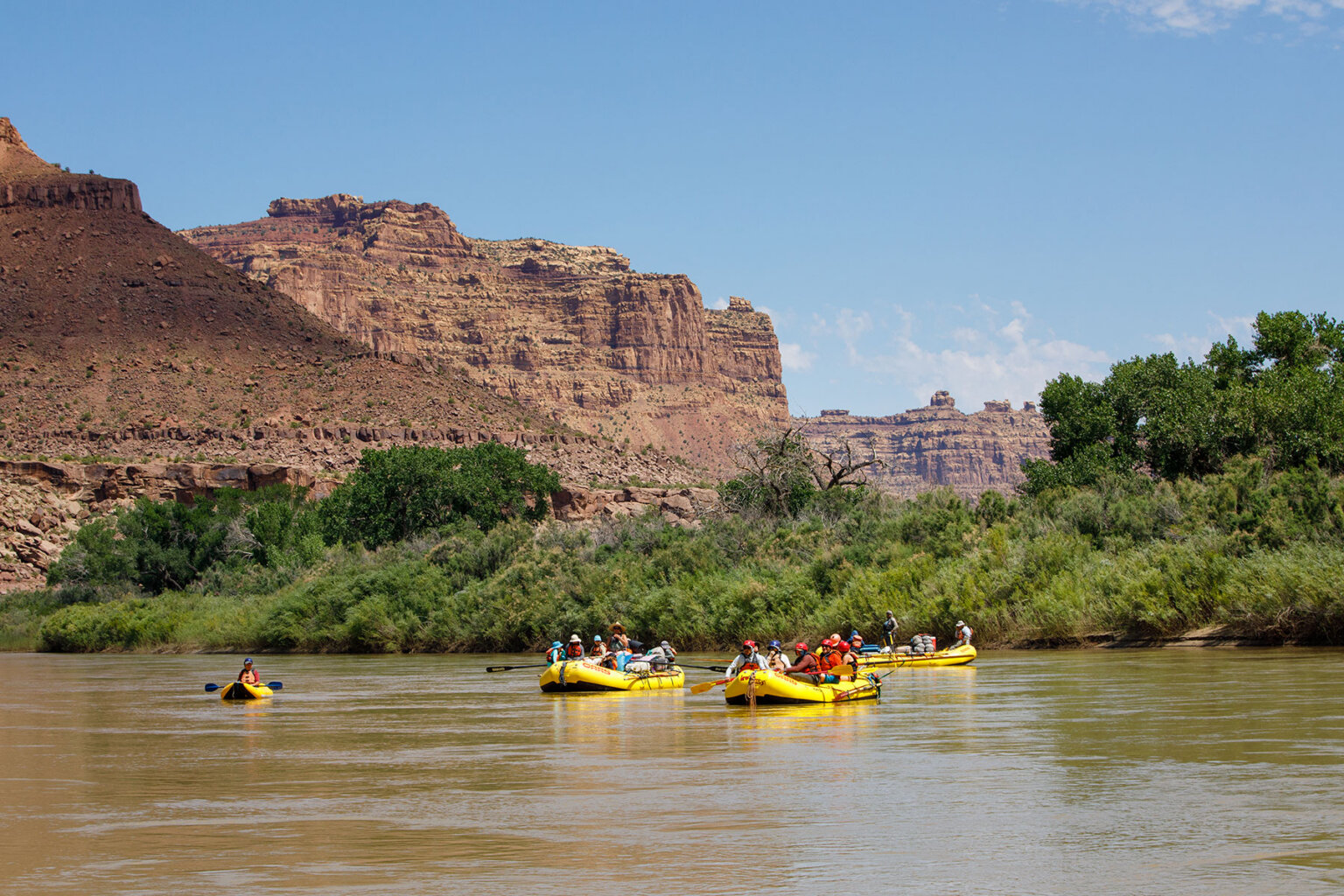
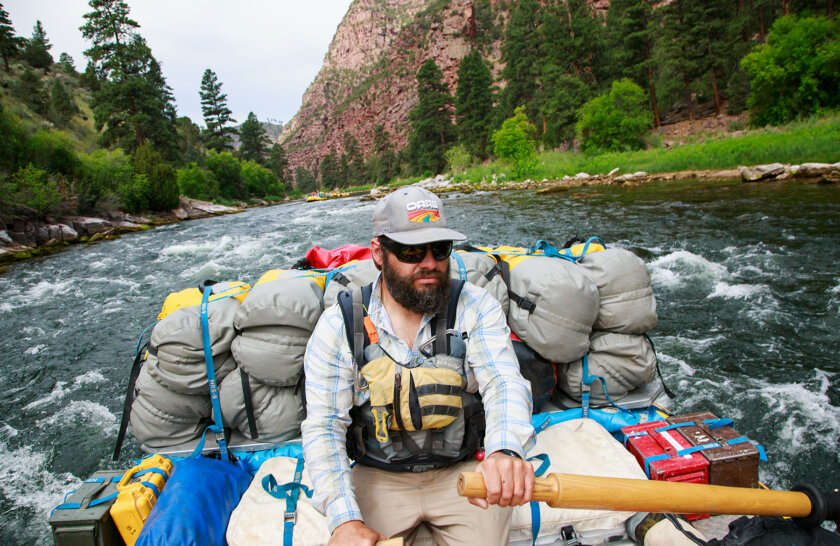
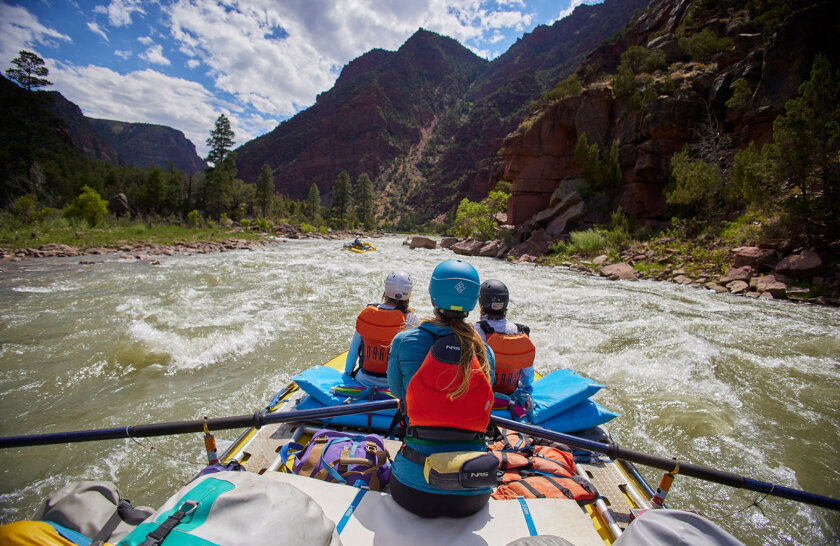
The number and variety of boats on an OARS trip will vary based on water levels, the number of participants, and other factors we take into account when planning your adventure. Please be aware that in doing so, we will ask you to share boat time with your fellow travelers. We don’t assign boats, nor can we guarantee exactly which crafts we bring, but trust us to provide you with the best possible mix for you and others on your trip.
Learn more about the OARS Fleet and the boats that may be a part of your experience: Oar rafts (at times assisted with an outboard motor); additional boat types, including dories and inflatable kayaks, dependent on water level, river section, and other factors.
Included Lodging
When you book this expedition, you’re signing up for one seamless adventure from start to finish. This includes one night of lodging at Vernal’s beloved Dinosaur Inn, the night before the trip, and one night after the Gates of Lodore leg of the trip, where we’ll regroup before launching in Desolation Canyon.
Following your time in Cataract Canyon, guests will enjoy a scenic flight to the town of Page, AZ, followed by two nights of comfortable lodging accommodations in Marble Canyon before launching on the Grand Canyon portion of this expedition.
Finally, to help you ease back into civilization after two weeks in Grand Canyon, we’ve included a night at Flagstaff’s DoubleTree Hotel following our last day on the river.
This trip includes 5 nights of lodging and all meals during “land” days, plus 39 nights of riverside catered camping.
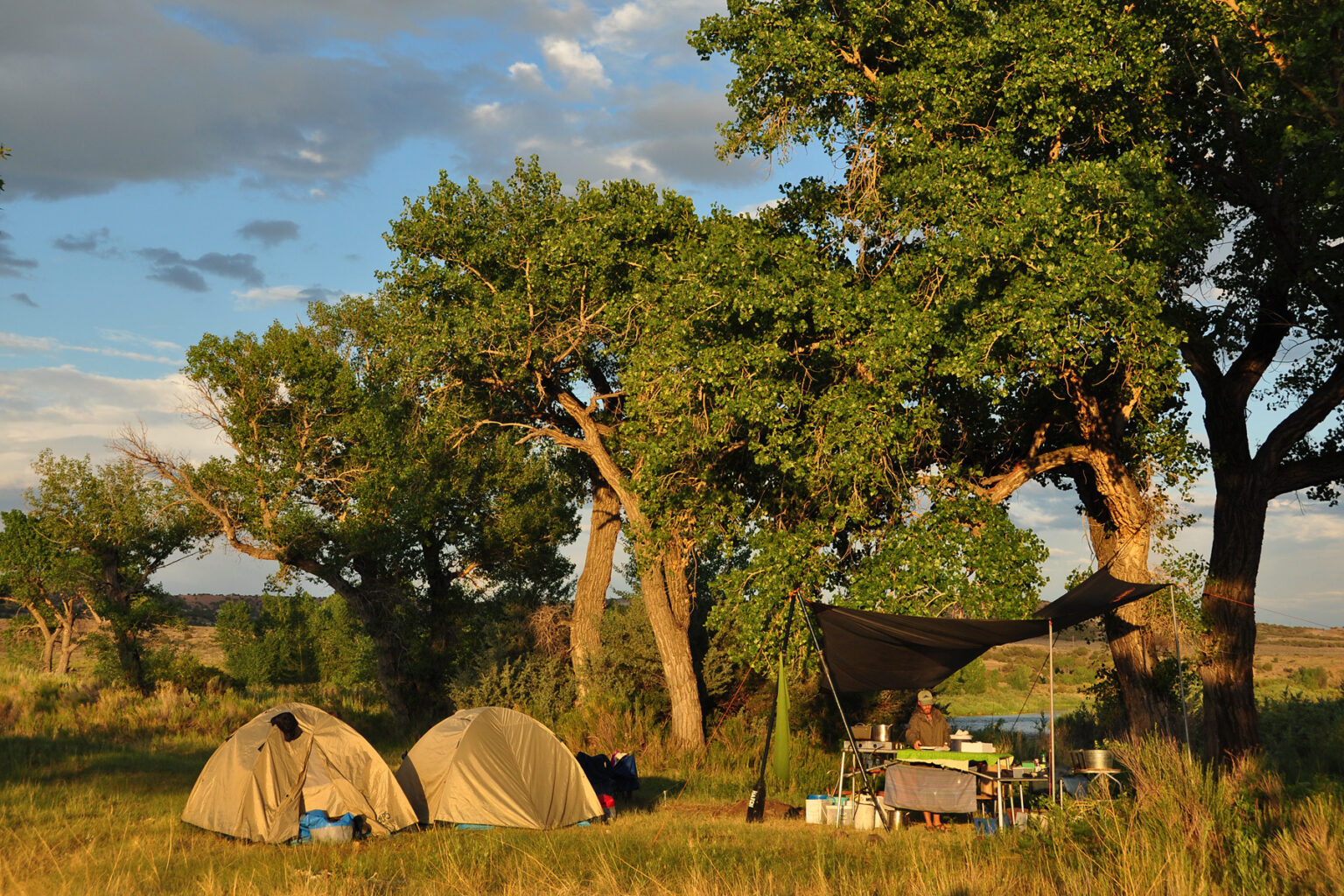
After each active day on the river, we pull ashore to camp for the night. Our first task is to unload the boats using a fire-line of crew and guests to expedite the process. Individuals then collect their waterproof bags and locate an area on the beach to camp for the night.
While you put up your tent, the guides will set up the kitchen and central dining/seating area with camp chairs. They will also locate a secluded area away from camp to set up the portable toilet, where privacy is assured.
As guides prepare dinner, hors d’oeuvres are served. This is an opportunity to relax, enjoy a drink if you wish, and reflect on the day with your fellow traveling companions.
In the morning, the first wake-up call lets you know that coffee, hot water for tea or cocoa, juice, fresh fruit, and cold cereal are ready. You can fill your mug and grab a bite, then begin to pack up your personal belongings and sleep gear as the guides prepare breakfast.
After breakfast, the entire camp is broken down and packed up. Once the guides have all of the gear loaded back onto the boats, we’ll head downstream to see what new adventures await us.
More info about Meals & Dietary Restrictions can be found on our Trip Resources page.
Average Air & Water Temperatures
| Air (Day) °F | Air (Night) °F | Water °F | |
|---|---|---|---|
| May | 74 | 40 | 45-55 |
| June | 84-101 | 48-56 | 50-72 |
| July | 103 | 75 | 48-55 |
While these are historical averages, the weather can be unpredictable on the river. May and June often bring extreme weather shifts, and July can be hotter than average. It’s important on an expedition like this to be prepared for all conditions.
Water Levels & Temperature
The Green River’s headwaters lie in the Wind River Range of Wyoming, and its stream is repeatedly blocked and diverted, most significantly by the Flaming Gorge Reservoir, not far upstream from Dinosaur National Monument. Thus, its flow is determined by reservoir releases. The Green will also spike in the spring and early summer as the controlling agency at Flaming Gorge Dam releases water to make room for inflow. Peak releases from Flaming Gorge on the Green usually occur between mid-May and mid-June, but can vary widely from early May into July. The Green River continues on until the confluence with the Colorado River.
The flow of the Colorado River through Cataract Canyon is generally unregulated, meaning no single reservoir controls the water level. Peak run-off through Cataract Canyon usually occurs between mid-May and mid-June, but can vary widely from early May and into July. High-water trips equate to a more intense whitewater experience, and a high level of physical fitness is recommended. Water temperatures are coldest during the high water period, and rain gear and warm synthetic clothing will be required. In reality, the water is quite cold even in the summer, but lower flows and warmer air temperatures mitigate the risk of hypothermia.
The water levels of the Colorado River through Grand Canyon are regulated by the release of water from the Glen Canyon Dam. The Colorado generally fluctuates up and down several feet within the day, based on the time of year and demand for electricity. Because the flow is dam-regulated, even in a drought year, the water levels are fairly consistent. The temperature of the river has historically been 48°- 55° F, though it can trend warmer when upstream reservoir levels are lower.
Whitewater
Green River: Flaming Gorge to the Confluence of the Colorado
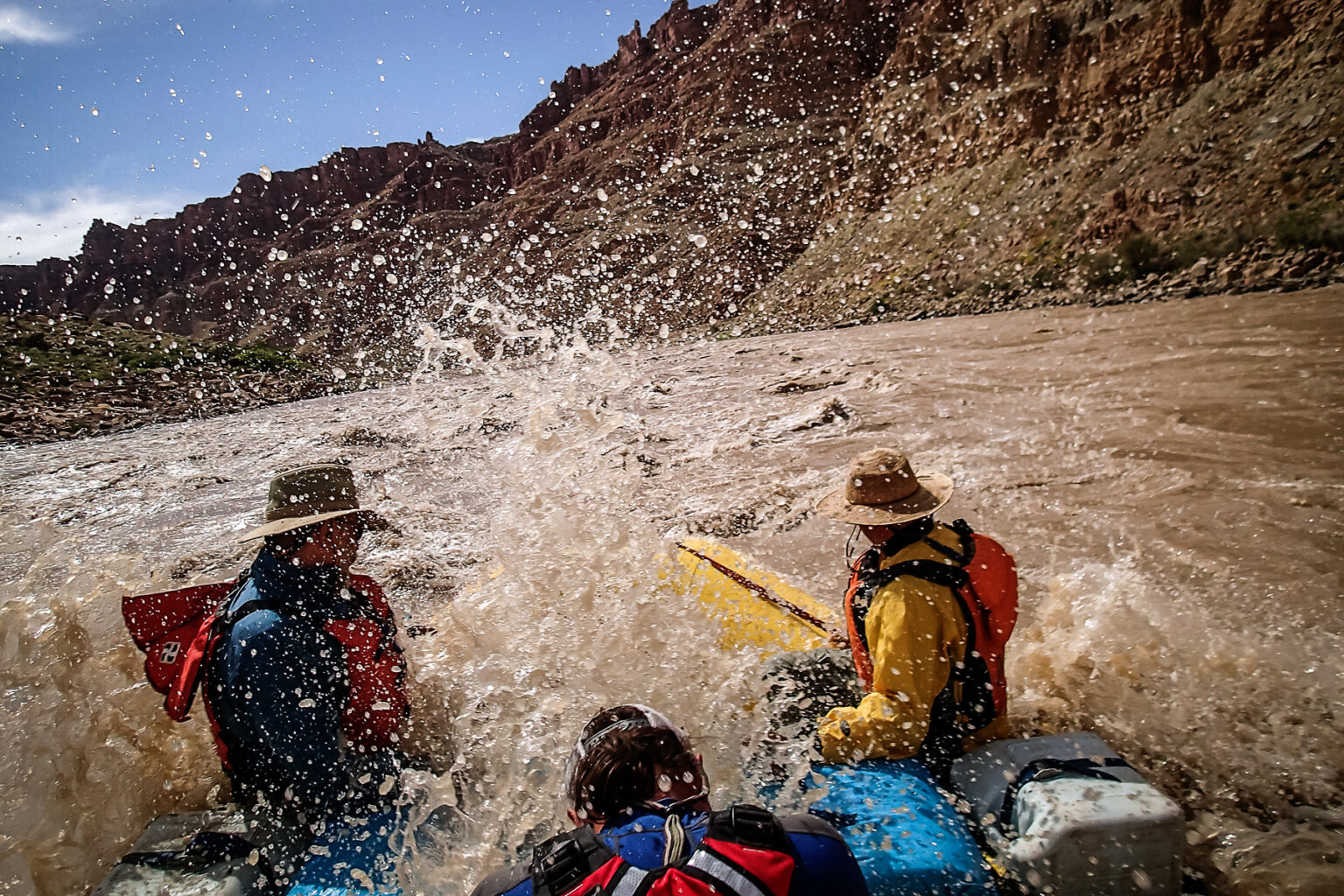
The Green River offers splashy Class II rapids and thrilling Class III rapids, interspersed with miles of smooth water that inspire swimming, watching for wildlife, and gazing at the canyon scenery. Despite these slower stretches, there are several thrilling stretches of whitewater on the Green, including a number of exciting Class III rapids in Lodore and Split Mountain Canyon, and more than 50 rapids through Desolation Canyon.
Colorado River through Cataract Canyon
This stretch of the Colorado River is typically rated Class III-IV; however, in the high-water season of May and June, Class V whitewater is possible during peak flows. During this time, rafters can look forward to huge waves and the famous “Big Drops,” which at times can make even Grand Canyon’s Lava and Crystal Rapids seem tame. This is some of the biggest navigable whitewater in the U.S. at peak flows.
Grand Canyon Whitewater: Lees Ferry to Pearce Ferry
There are 47 rapids rated 5 or higher on the Lees Ferry to Pearce Ferry section. Whitewater in the Canyon is rated on a scale of 1–10 (unlike most western rivers, which use the I–VI scale). A “1” is a small riffle, and a “10” is the most difficult rapid still considered runnable. The two most notable Grand Canyon rapids, Crystal and Lava Falls, are both rated a 10. The intensity of all rapids naturally depends on the water level, so conditions at low and high water levels may vary slightly.
Based on various circumstances, such as water levels and current flow, we occasionally find it necessary to have our passengers walk around certain rapids. The decision is made by the trip leader with the first concern being the safety of each passenger, and the second being the ability to run a rapid without damaging the boats. This will give you a great opportunity to take some wonderful photos of the rafts as you watch your guides demonstrate their boating skills. When conditions warrant, you may also be asked by your trip leader to wear a helmet. For your own safety, however, you may feel more comfortable wearing the helmet even when not specifically requested by the trip leader.
Learn more about whitewater rafting levels and classifications to help you choose the right adventure for your experience, comfort and skill level.
Before booking your trip with OARS, there are a few important considerations we’d like you to know about.
Reservations and Payments
Reservations and Payments
A $2500/person deposit is required at the time of booking. A second deposit of $2500/person is due in our office by November 1 of the year before your trip. If you make your reservation after November 1 of the year before your trip, the entire $5000/person deposit is due at the time of booking. Final payment is due 120 days before departure. Accounts on which final payment has not been received by the final balance due date are subject to cancellation.
Payments can be made by check, money order, eCheck, wire transfer, Visa, MasterCard, American Express or Discover. Prices are in US Dollars, and all payments must be made in US Dollars. Payment of the deposit establishes your acceptance of our complete Terms and Conditions. Your payment is fully refundable for 7 days, less a 3% processing fee, after making a reservation when you reserve a trip 7 days or more prior to the final payment due date. Following the 7-day rescission period, all payments are non-refundable.
Cancellations and Refunds
Canceling your trip after your deposit is processed will incur cancellation fees because OARS has absorbed costs on your behalf and will turn others away who would like to book the spaces we’re holding for you. If you must cancel your reservation after the rescission period described above, your cancellation fee will be determined according to the schedule below.
We regret that we cannot make exceptions to the cancellation policy for any reason, including foul weather, poor air quality, wildfire activity, acts of terrorism, civil unrest, or personal emergencies. For these reasons, we strongly urge you to purchase a travel protection plan.
| Date of Cancellation | Cancellation Fee |
|---|---|
| 120 or more days before your trip | Deposit(s) |
| 119 days or less before your trip | Full fare |
Canceled Trips
OARS reserves the right to cancel any trip due to insufficient registration or other factors that make the trip impractical to operate. In such instances, we will inform you at least 45 days prior to departure. Do not make nonrefundable travel arrangements unless you have spoken to your Adventure Consultant regarding the status of your trip.
If a trip must be canceled or postponed due to force majeure (factors outside the control of OARS), OARS will provide full credit for payments made toward future travel, or a refund less a 5% service fee plus any nonrefundable payments made on your behalf to 3rd-party suppliers. OARS will make good faith efforts to recover deposits made on your behalf to 3rd-party suppliers; however, we can’t guarantee recovery of any or all of the advance payments made. OARS is not responsible for expenses incurred by participants in preparation for a canceled trip.
Transfers
If you need to move your reservation to a different trip during the same season or to a credit account for the following year, there is a $1000/person fee up until 180 days before departure for a one-time transfer of your payment. Transfer requests made 179 days or less before departure will be treated like a cancellation according to the schedule above.


O.A.R.S. Canyonlands, Inc. is an authorized concessioner of Canyonlands National Park and Dinosaur National Monument. O.A.R.S. Grand Canyon, Inc. is an authorized concessioner of Grand Canyon National Park.
Ancestral Lands Acknowledgement
We respect and recognize that many of the river canyons on state and federal lands where we operate are the ancestral homes of indigenous communities.
Where we operate on the Green and Colorado Rivers between Flaming Gorge and Hite Crossing, we acknowledge the territories of the Eastern Shoshone, Ute, Pueblo of Canyonlands National Park, Southern Paiute, and the Navajo Nation.
Where we operate on the Colorado River between Lees Ferry and Pearce Ferry, we acknowledge the territories of the Navajo Nation, the Pueblo of Zuni, Ute, Southern Paiute, Hopi, Hualapai, and Havasupai. Today there are 11 federally recognized tribes that still inhabit the region and share deep cultural connections to the river, land, and historical sites now found within Grand Canyon National Park.
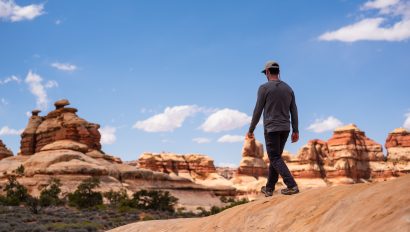
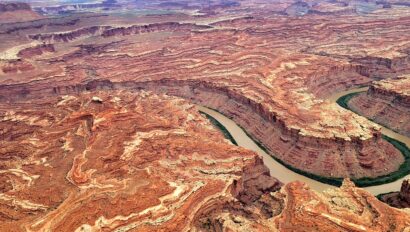
For You
You May Also Like
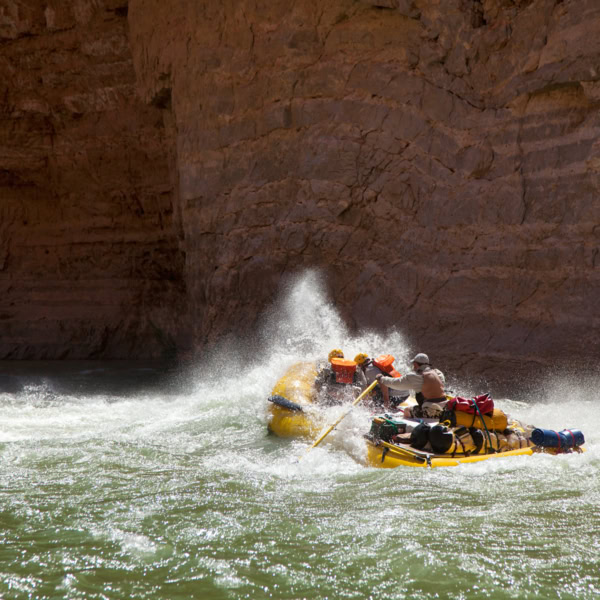
Grand Canyon Rafting: Lees Ferry to Pearce Ferry
Location:
Grand Canyon, Arizona
Adventure Level:
Challenging
Minimum Age:
12
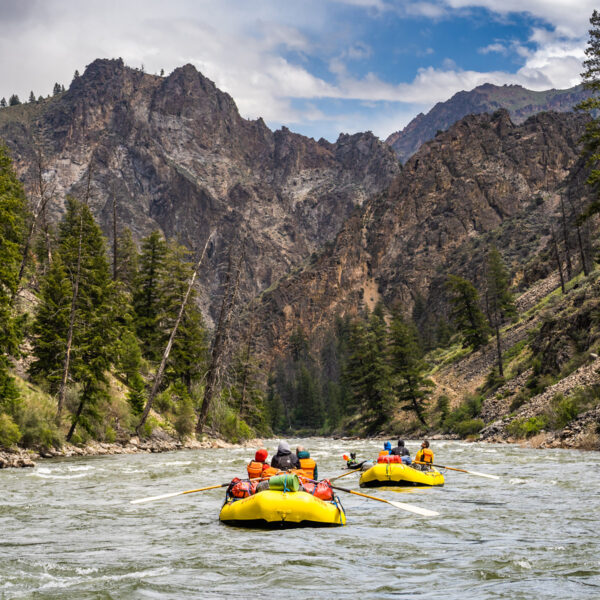
Ultimate Salmon River Experience
Location:
Idaho
Adventure Level:
Moderately Challenging
Minimum Age:
15
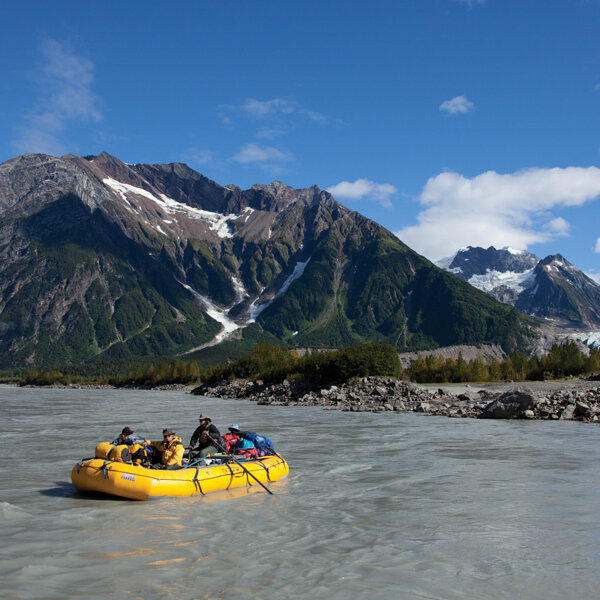
Alaska Rafting on the Tatshenshini River
Location:
Alaska
Adventure Level:
Moderately Challenging
Minimum Age:
13
Can’t Decide?
Use our Compare tool to find your perfect Adventure.