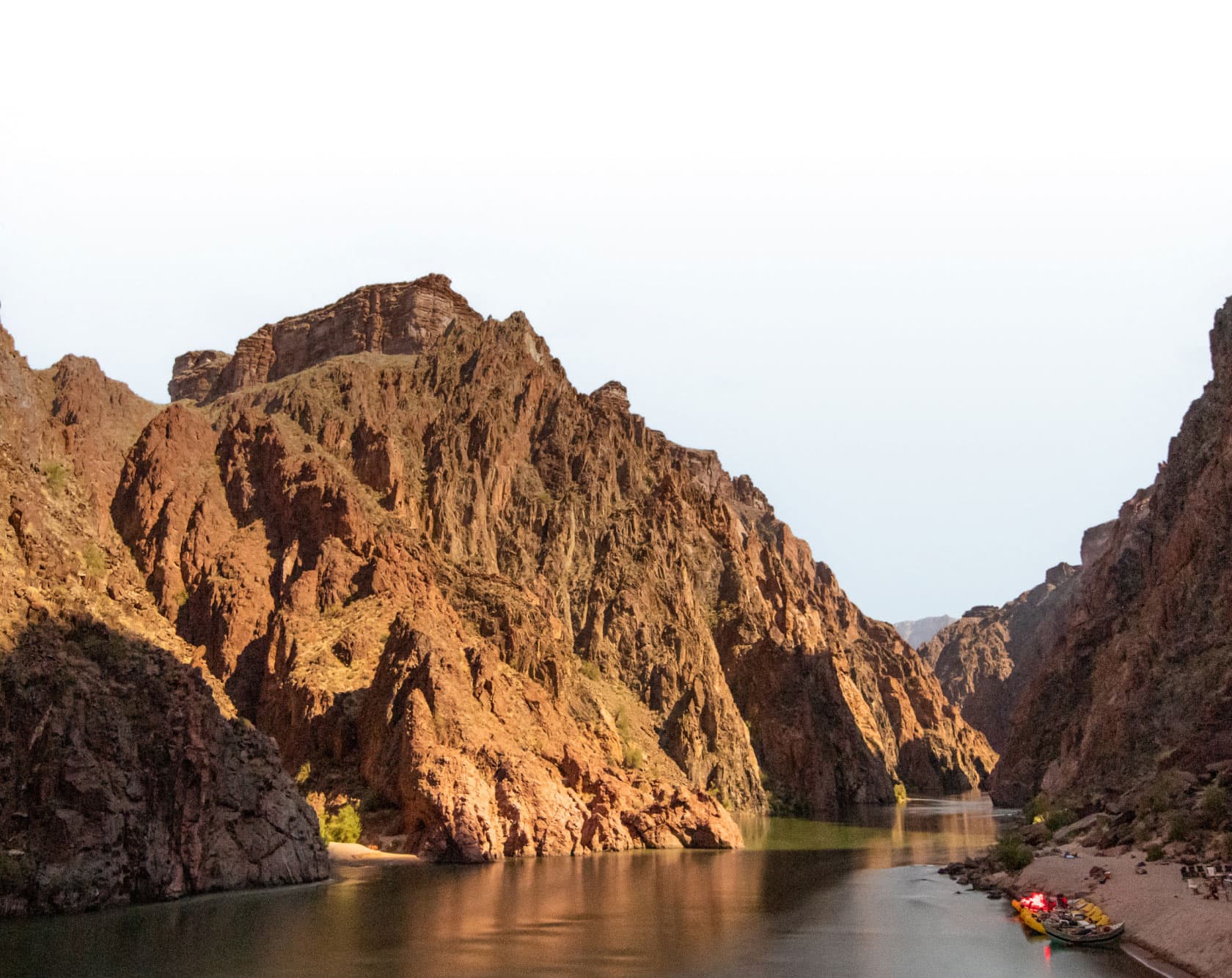
OARS & MT Sobek: An Alliance Forged by Legends
Right Place, Right Time
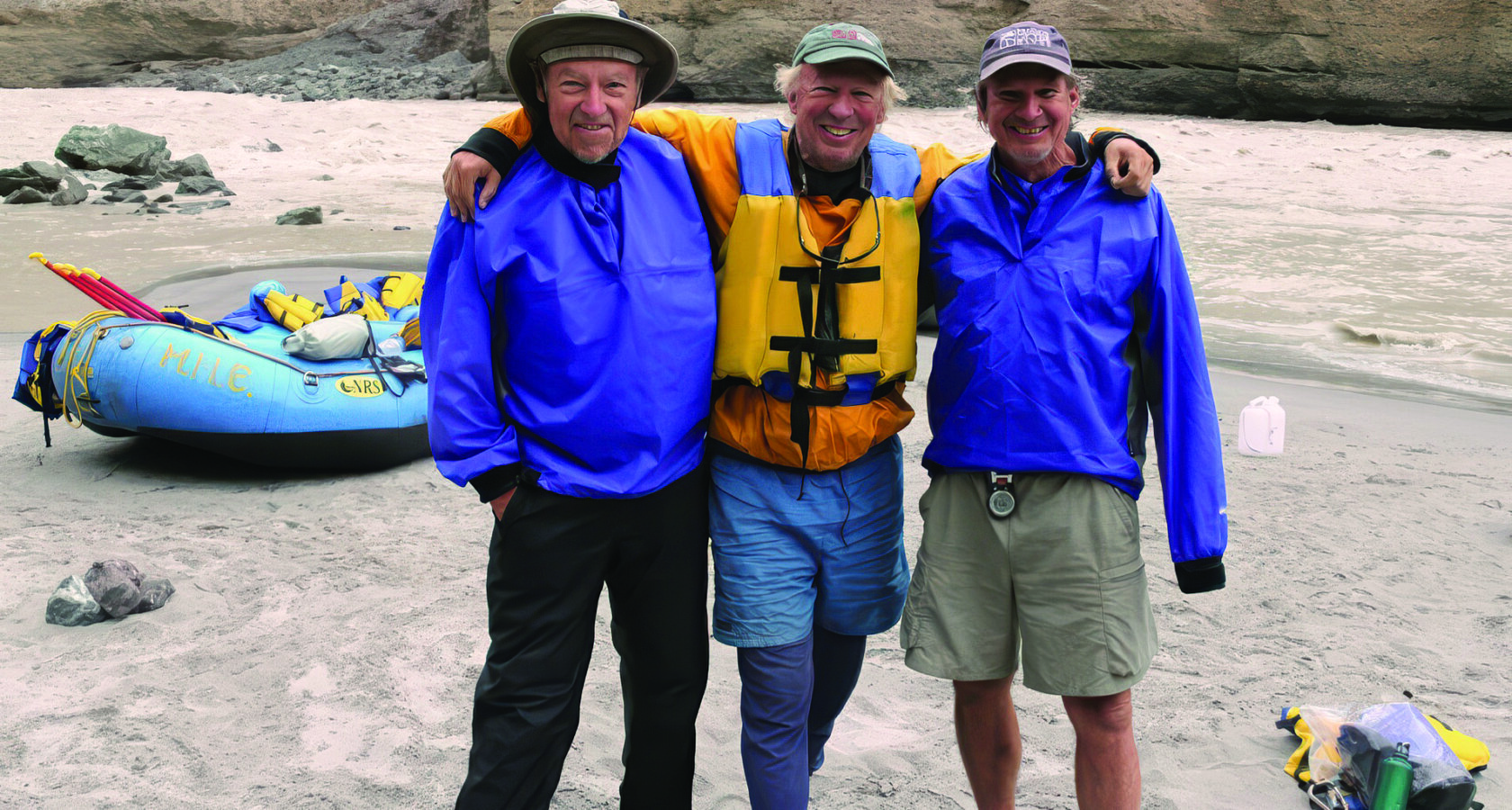
In the winter of 1971-72, Skip Horner was teaching cross-country skiing and leading backcountry ski trips in Aspen, CO. One snowy early-season day, Skip hitchhiked the 10 miles to Snowmass, as he often did, where the recreation office had arranged a group for him to guide. The group never showed.
As Skip recounts in the book, Sobek – The Cutting Edge of Adventure, while waiting in the office, he offered to cover the desk for “the ladies” when they went for a mid-morning coffee.
“As the door swung in behind them on their way out, an eager-looking but somewhat bashful man walked in,” tells Skip. “He asked if we would display his Colorado River brochures in our rack. It was a Casablanca moment. Of all the ski joints in all of the ski towns in all of the world, George Wendt walked into mine.”
Skip admits his whitewater experience at the time consisted of once having paddled a canoe through some riffles, but he embellished the truth and asked the owner of OARS for a job anyway. He said, “George smiled and dipped his head a bit, nodded, and said ‘Gee, maybe. Keep in touch.’”
Skip sent George a postcard every few weeks that winter. Hearing nothing back for months, he made plans to bike up the length of Norway and find places to ski. In early May, not long before he departed, airline tickets in hand, a postcard finally arrived from George: “Come train on the Colorado. Lees Ferry, June 1. No promises of work. Call me.”
When Skip called, George asked him to come to Angels Camp, CA to run the Stanislaus River and get some time on the oars. Skip promptly cashed in his ticket to Oslo and bought a 10-foot surplus raft with plastic oars. Figuring he’d better learn to row, he ran the Colorado River through Glenwood Canyon every day for two weeks wearing jeans, a wool shirt, and a horse-collar life jacket. He was alone except for his dog who ran up and down the shore.
“I could have died any number of times,” Skip recalls. “But the slice of the oars, the chilly splash, the proximity of danger, and the flowy movements through newly-learned ferry angles invigorated me.”
A Teacher Finds His Calling
George Wendt’s river journey started in the summer of 1962 when he set out with a group of fellow Bruin Mountaineers from UCLA for a 10-day trip on the Colorado River through Glen Canyon. An experienced backpacker, he was immediately captivated by how effortlessly the group flowed through the wilderness. “I remember thinking it felt like a magic carpet ride through a beautiful paradise,” he once said.
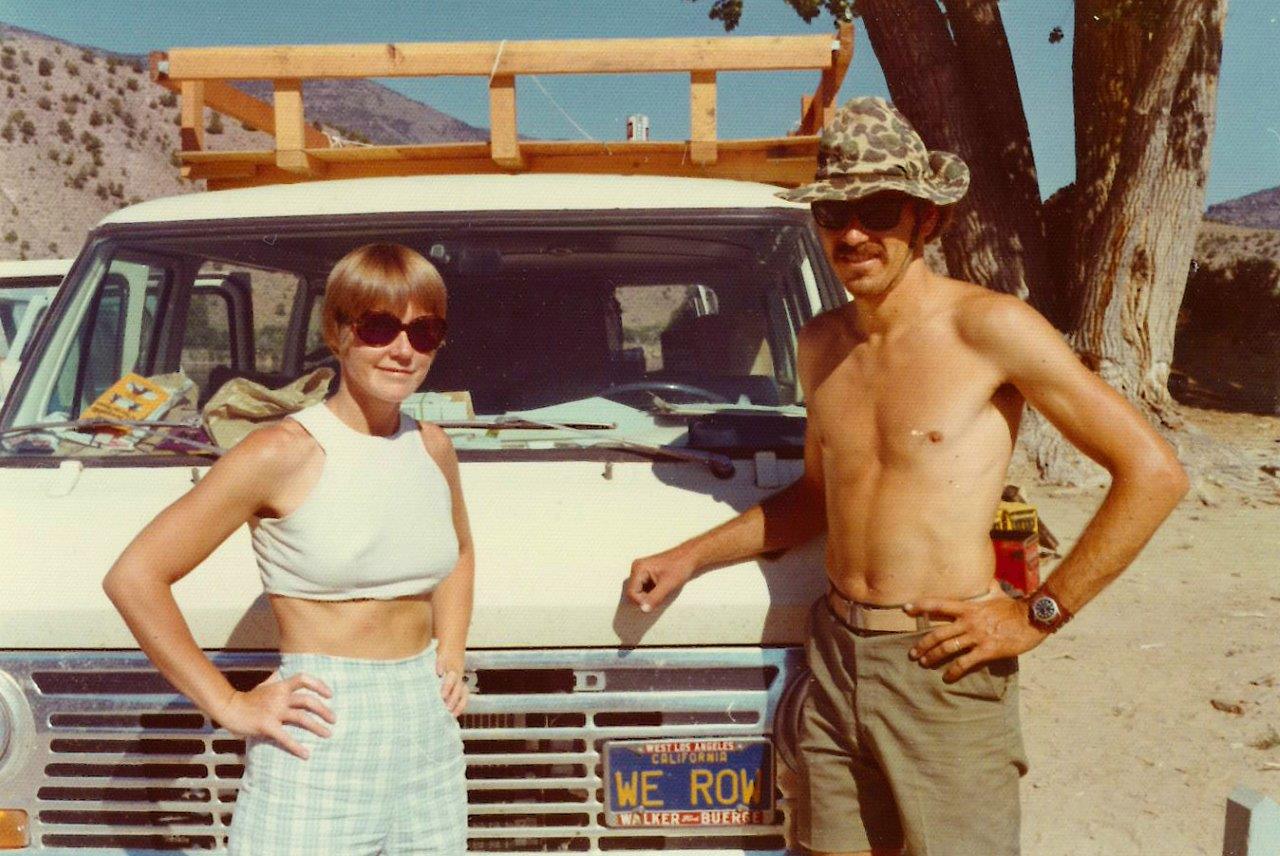
By the late 1960s, George was working as a math teacher at Paul Revere Junior High in Los Angeles and spending his summers taking friends on river trips in California and throughout the Desert Southwest. In 1969, he teamed up with Ed Gooch—a fellow teacher at Paul Revere who had been a boatman for Georgie White in the Grand Canyon in the 1950s. After operating for two years as Gooch-Wendt Expeditions, Ed Gooch bowed out of the business to pursue a booming Indian jewelry trading business, selling his interest in the company to George and his wife, Pam Wendt. In 1971, it was Pam who came up with the name “O.A.R.S.,” which was an acronym for Outdoor Adventure River Specialists. And in 1972, the company became the first exclusively oar-powered rafting outfitter authorized to run commercial river trips through Grand Canyon National Park.
While OARS was outfitting guided trips on the Colorado River, Utah’s San Juan River and the Rogue River in Oregon, the company’s operations in Northern California were growing rapidly, particularly on the Stanislaus River.
“I was teaching full-time in Los Angeles, but found that I could leave on a Friday night, drive the 300 miles to the Stanislaus, run a two-day rafting trip and be home late Sunday,” George shared in a 2014 interview. In 1973, as rafting on the Stanislaus soared in popularity, George decided to quit his job as a teacher and he and Pam relocated to Angels Camp where they initially operated OARS out of their basement. George was now fully committed to bringing people into the wilderness to share his passion for wild river canyons.
A Letter to 21 Outfitters
In 1968, while home in Maryland from his first semester in college, Richard Bangs attended a meeting of the local Canoe Cruisers to watch a Super-8 film of their members who had canoed the Colorado River through Grand Canyon earlier that summer. Mesmerized by the footage, he wrote to outfitter Ted Hatch, citing a fabricated list of credentials and was hired by Hatch River Expeditions sight-unseen as a Grand Canyon river guide in the spring of 1969. Starting at the age of 18, Richard spent the next several seasons honing his skills as a river guide in the Canyon.
In the spring of 1973, Richard and his high school friend John Yost, along with a crew of guides, managed to pull off a historic first descent of the Awash and Omo rivers in Ethiopia. Made possible, in part, by John’s father, who was a Foreign Service officer with the U.S. State Department serving as the Deputy Chief of Mission for the U.S. Embassy in Ethiopia, the two “scooped” a well-funded Omo River expedition by National Geographic by just a few months. While bringing this historic expedition to fruition, Richard and John realized they had stumbled into a wilderness of such staggering beauty and cultural depth that a return to conventional career paths was no longer an option. What started as a last hurrah before graduate school now had them determined to make Sobek Expeditions a reality.
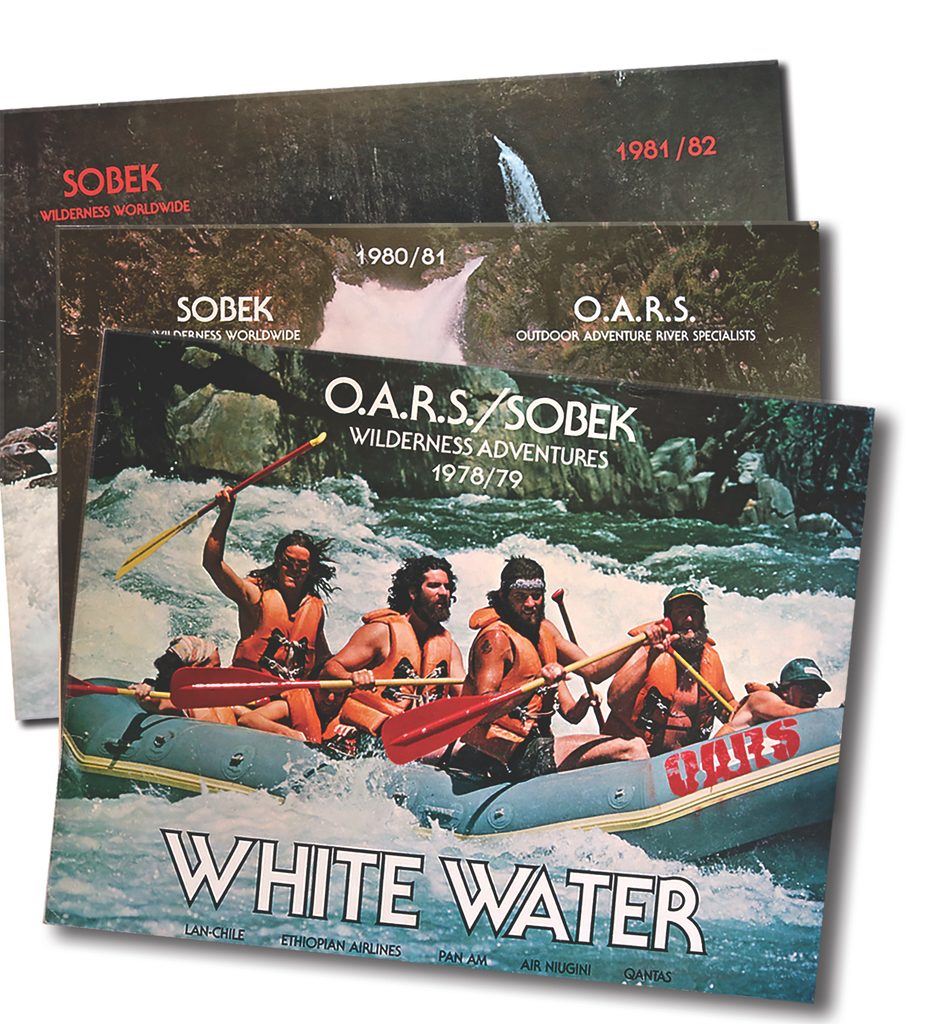
Upon returning from Ethiopia, Richard—dead broke and in desperate need of boats, gear, and guides—wrote a letter pitching the concept of a new international rafting venture to all 21 Grand Canyon outfitters. Only George Wendt responded. He agreed to meet Richard at Lees Ferry and was quickly won over by Richard’s enthusiastic projections. Sobek’s first black-and-white brochure This first-of-its-kind partnership lasted George said, “I’m in” and immediately agreed to supply two rafts and two of his guides—Jim Slade and Robbie Paul—to join the first commercial trip on the Omo that fall. A partnership was born.
The Golden Age of Adventure Travel
OARS would serve as the “anchor support system” for Richard and John—providing gear, guides, access to the OARS mailing list, and much-needed financial stability. In exchange, George was offered a 33% ownership stake in Sobek. To seal the partnership, George and Pam drove down to Los Angeles—where Richard had just completed his master’s in journalism at USC—and loaded Richard’s bed into their vehicle to bring him up to Angels Camp.
Working side by side in George’s basement, at adjacent card tables under a single, bare lightbulb, George recalled Richard being “incredibly prolific,” hand-typing letters to heads of anthropology departments all over the country to ask for advice on interacting with isolated tribes, while George fielded bookings and managed the logistics for OARS. Over the next year, the duo cobbled together for the Omo River, which was sent to the OARS mailing list. John Yost would eventually join Richard and George in Angels Camp and take over the day-to-day operations for Sobek.
By 1976, business was booming, and much to Pam’s delight, they were able to purchase a seven-acre property down the street from their house on Highway 49, finally moving the office out of the basement. For the next 15 years, the two companies shared space at “One Sobek Tower” while running dozens of first descents of wild rivers all over the world, including the Blue Nile in Ethiopia, the Tatshenshini in Canada and Alaska, the Zanskar in India, the Bio Bio in Chile, the Zambezi on the border of Zambia and Zimbabwe, the Yangtze in China, and many more. Guides like Bart Henderson, Jim Slade, and Stan Boor would return from these expeditions with boxes of slides that George and Richard would use to create groundbreaking joint color catalogs that were printed in runs of up to 200,000 copies. George recalled the mailroom at “One Sobek Tower” being an absolute madhouse as thousands of reservation inquiries and deposit checks flooded back to Angels Camp.
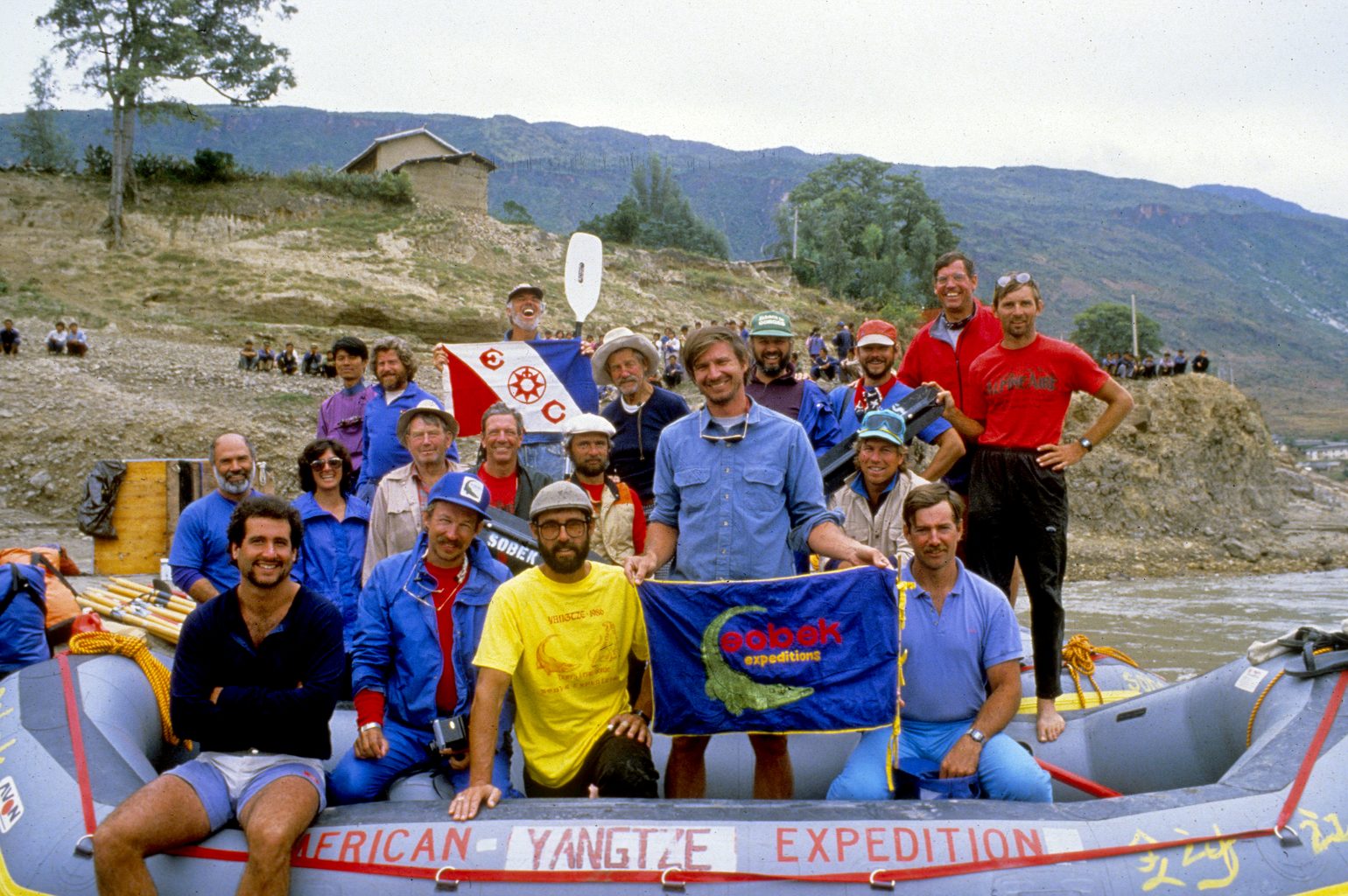
Thanks largely to some of the most intrepid guides on the planet, for nearly two decades, OARS and Sobek positively impacted the lives of many thousands of adventurous travelers while helping to raise awareness for the importance of protecting and preserving rivers and their fragile landscapes—forging many lifelong friendships along the way. Together, they proved that stepping outside of one’s comfort zone into the wilderness could be deeply transformational, ultimately building the blueprint for adventure travel as we know it today.
This first-of-its-kind partnership lasted until 1991 when the perfect storm of increasing competition, a devastating insurance crisis, and the sudden geopo-litical shock of the First Gulf War put both Sobek and another well-known adventure travel company, Mountain Travel, under severe financial strain. By the end of 1991, an investor stepped in to rescue the companies. As part of the buyout, Sobek merged with Moun-tain Travel to become Mountain Travel Sobek, known today as MT Sobek, and permanently relocated their offices to the Bay Area. Richard was the only Sobek founder who maintained his interest in the company and is still part of MT Sobek today.
Another Chance Encounter
Mountain Travel was founded in 1969 by Leo Le Bon, along with business partners Allen Steck and Barry Bishop, out of Albany, CA. Under Leo’s leadership, the company organized the first American-led trekking expeditions in Nepal and was widely recognized as the premier mountaineering and high-altitude trekking company in the world—celebrated for its strict professional standards, meticulous operational structure, and an unyielding quest for perfection.
It was against this backdrop that Skip Horner’s path crossed with Leo’s. During Skip’s third and final season of guiding for OARS in 1974, Leo brought his two kids, Billy and Suzy, on a Grand Canyon rafting trip. For the young guide from Aspen, it was yet another opportunity of a lifetime.
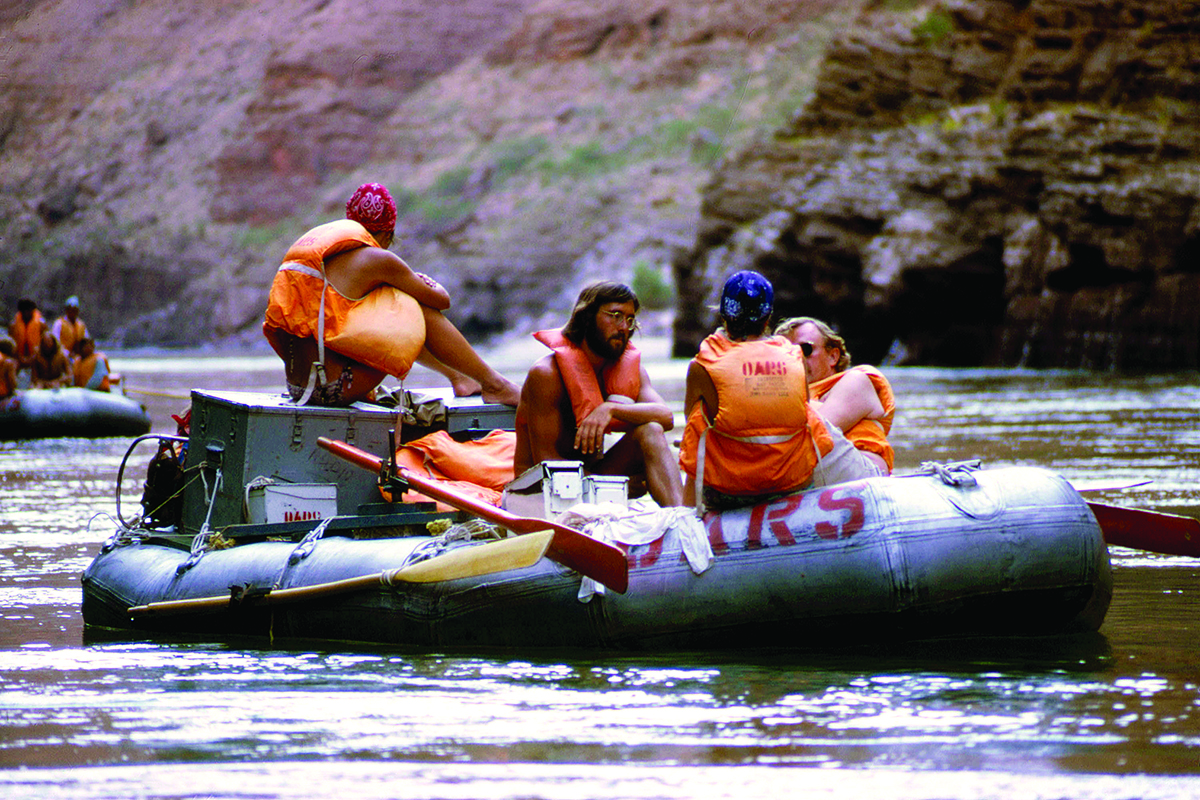
“I really wanted to work for Mountain Travel,” says Skip. “We all did back in those days. We knew that Mountain Travel was the top end of guiding. We all aspired to that but we also believed that Mountain Travel only hired older guides. I was 24 at the time, but at that point, the adventure travel industry was in such infancy that there was little precedent for guides being hired, you know, guiding people through places they’d never been before. Nonetheless, I knew Mountain Travel is where I wanted to be.”
Skip paid special attention to Leo’s kids on that trip. He took them hiking, taught Billy how to juggle, taught Suzy how to row, and could see that Leo was happy because his kids were having a good time. By the end of the trip, Skip got up the nerve to ask Leo for a job. “Give me a call in a week or two and we’ll see what we can do,” Leo replied.
Skip remembers “stopping after a San Juan trip in Grey Mountain on the Navajo reservation south of Marble Canyon and going into that phone booth to call Leo with my heart just pounding and Leo, in his Belgian accent says, ‘Oh, I think I might have something for you. How would you like to go to Mount Everest?’ Of course, I just about blew out the phone booth.”
Skip guided his first Mountain Travel trip in Nepal in December 1974. For the next four years he guided trekking trips in the Himalaya, the Karakoram, and the Andes before reconnecting with OARS and Sobek to lead the first commercial descent of the Bio Bio in 1978, followed by first descents of 12 major rivers, including the Yangtze, the Zambezi, and the Wahgi-Tua.
For the better part of five decades he continued to work as a mountain guide, and in 1992, Skip became the first American to lead a client to the top of Everest, as well as the first person to guide clients to all Seven Summits. Along the way, he had done what almost no one else in the industry could claim—guided for OARS, Sobek, and Mountain Travel, three now legendary companies he’d stumbled into by little more than chance and sheer determination.
“I like finding my way in wild country, but I love taking others with me,” Skip says. “I was born to guide.”
Today, OARS is, once again, proud to partner with MT Sobek to showcase a premier collection of world-class trekking expeditions alongside our own signature hiking adventures. Together, we continue to define modern adventure travel and cater to the enduring human desire for wilderness, connection, and the transformative power of the journey.
Sign up for Our Newsletter