Galápagos Adventures
Tour the GalÁpagos
Whether you prefer to swim with playful Galápagos sea lions or study the 13 species of endemic Darwin Finches, a vacation to the Galápagos Islands is a must-do for natural history and wildlife enthusiasts. Due to the lack of any natural predators, the wildlife and animals of the Galápagos meander freely and fearlessly around the islands, giving you endless photographic opportunities, as well as time to gaze into the eyes of some pretty bizarre and awesome wildlife.
The Galápagos archipelago consists of more than 100 volcanic islands and islets formed between 3 and 5 million years ago. These unique wildlife habitats are located 600 miles off the coast of Ecuador on the equator. The Galápagos Islands are spread over roughly 50,000 square kilometers of Pacific Ocean. They were, of course, the inspiration for Charles Darwin’s theory of evolution. There are 13 major islands in the Galápagos, 5 of which are inhabited, including Santa Cruz, Baltra, San Cristobal, Isabela and Santa Maria (aka Floreana). The other islands are uninhabited, but are visited by adventure travelers who eagerly photograph the many species living in their island landscapes.

Find Your Perfect Trip
Top Adventures in GalÁpagos
Origins of Species: Galápagos Islands Vacation
Location:
Galápagos Islands, Ecuador
Adventure Level:
Easier
Minimum Age:
8

Amazon & Galápagos Islands Adventure
Location:
Galápagos Islands, Ecuador
Adventure Level:
Easier
Minimum Age:
8
Exploring the Enchanted Galápagos Isles
Location:
Galápagos Islands, Ecuador
Adventure Level:
Easier
Minimum Age:
8

Trace History
Map
When is the best time to visit the Galápagos Islands?
In spite of the islands’ equatorial location, temperatures in the Galápagos tend to be surprisingly mild all year round. There are always intriguing goings-on in the Galápagos no matter the time of year. Simply stated, there is no off-season.
December through April/May is considered the warm season with higher temperatures and intermittent heavy rains, but plenty of sunshine. March is usually the warmest month, with temperatures ranging from 74-88 degrees Fahrenheit. The flora is in bloom, creating a colorful landscape and birds and reptiles start to breed. The sea is warmer and calmer during this time period, which makes for better snorkeling conditions.
June through November, the weather is relatively cool and dry with sunny or overcast days or an occasional light rain. August is traditionally the coolest month with temperatures ranging from 65-75 degrees Fahrenheit. This is the time period in which many of the animals that rely on the sea for their food will be breeding, including marine iguanas, fur sea lions and sea/shore birds.
.
What wildlife is native to the Galápagos Islands?
All plants and animals that live in the Galápagos Islands today are descendants of those that arrived from elsewhere. Native mammals are rare in the Galápagos, and include only those that could make the journey from Central or South America.
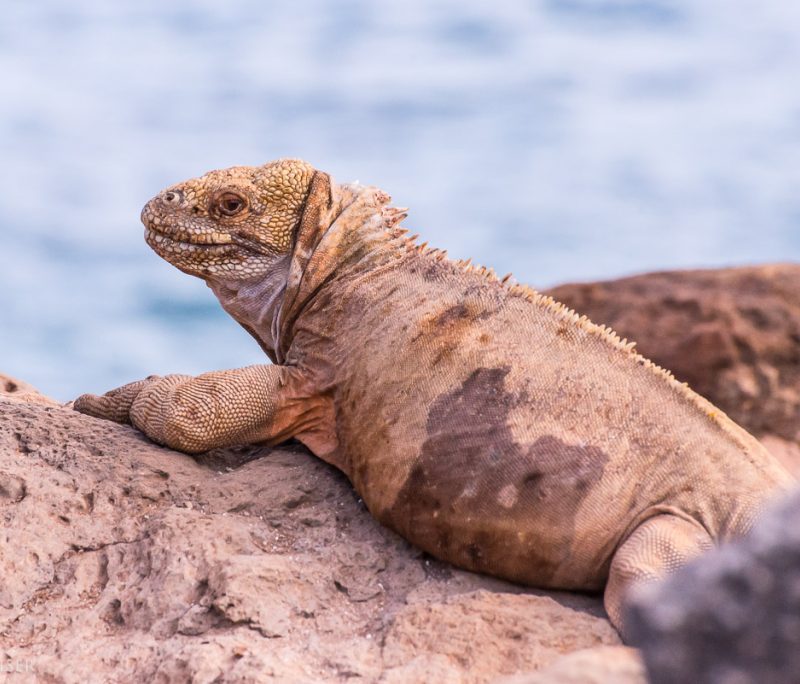
There are 23 species of land reptiles that live in the Galápagos Islands: 3 species of iguana, 7 lava lizards, 9 geckos, 3 snakes and 1 species of giant tortoise with 14 described subspecies of which 11 still exist, some with only small populations. Marine iguanas are the only sea-going lizards in the world, living on land but who graze on seaweed on coastal rocks or in the sea.
Native mammals include the Galápagos red bat, rice rats, Galápagos Fur Seal and the Galápagos sea lion.
What marine life is found around the Galápagos Islands?
The Galápagos Marine Reserve was established in 1998 to protect the waters around the Galápagos Islands and the many species of animals and fish that live there. There is a natural abundance of marine species in Galápagos because cold ocean currents bring rich nutrients for food, and there are a great variety of habitats: coral reefs, mangrove lagoons, rocky areas and sandy beaches.
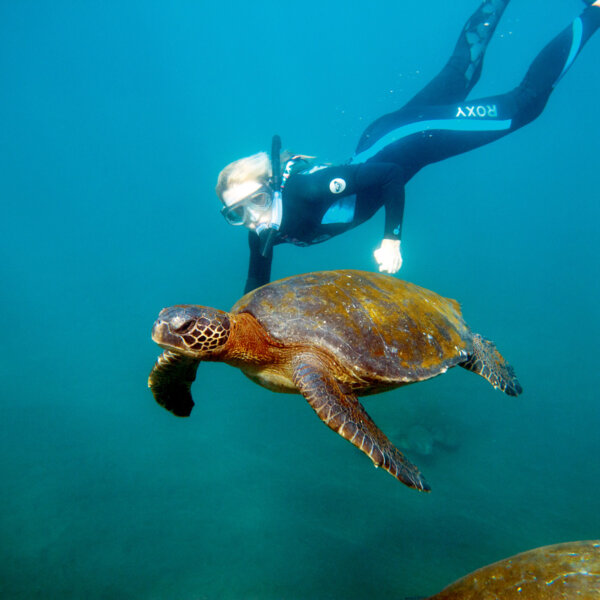
There are over 450 species of fish in the Galápagos Islands, and about 17% of these are endemic. There are four varieties of shark including the whitetip and blacktip reef shark, scalloped hammerhead and Galápagos sharks. There are stingrays, eagle rays, golden rays and manta rays, as well as at least 16 species of moray eels and the Galápagos green turtle.
What kinds of birds are found in the Galápagos Islands?
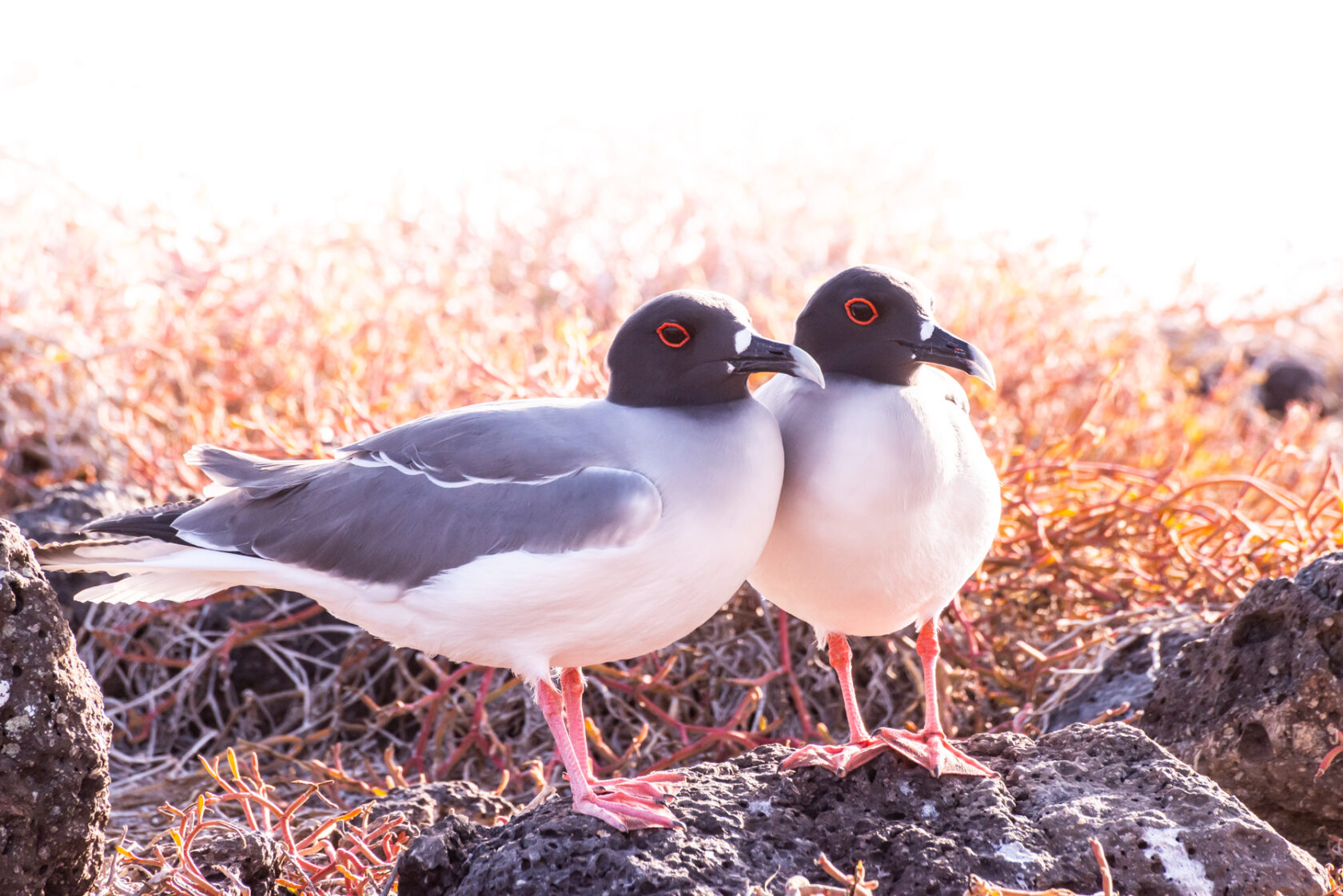
There are 29 species of land birds living in the Galápagos Islands, 22 of which are endemic. There are 19 species of sea birds that breed in Galápagos, and 5 of these are endemic. A partial list of birds found in the Galápagos include: blue herons, vermilion flycatchers, tyrant flycatchers, Galápagos hawks and doves, short-eared owls, woodpecker finches, petrels, and pelicans—on one island alone! Also found on the archipelago are: the great frigate bird and the magnificent frigate bird, the blue-footed booby, the red-footed booby and the Nazca booby, lava gulls, barn owls, and of course, Darwin’s finches.
The Galápagos penguin, endemic to the islands, is found on three Islands: Fernandina, Isabela and Bartolomé. This is the only penguin that is found north of the equator: it is able to survive because of the cold water found in the Humboldt Current.
The waved albatross only breed in one place in the world—on Española Island.
There are only 800-1000 pairs of flightless cormorant in the world, and they are found only on Isabela and Fernandina islands.
Why choose OARS for a vacation in Ecuador?
For more than 50 years, OARS has guided guests of all ages and abilities to fascinating locations worldwide. We know how to find exotic and abundant wildlife and scenic locations—without the crowds. We hire only the best guides and we believe it is a fundamental part of ecotourism is to work with local guides while at the same time bringing our wealth of experience to the table. Our like-minded partners in Galápagos realize they are accountable to OARS high standards, so you can rest assured you will be in good hands. A local naturalist, who will share his/her knowledge of Galápagos history, landscape, and bird and wildlife, will join your small group. Our experience puts you in the right place at the right time.
We are a committed member of the International Galápagos Tour Operators Association (IGTOA), a nonprofit association dedicated to the complete and lasting protection of the Galápagos. IGTOA’s mission is to preserve the Galápagos Islands as a unique and priceless world heritage that will provide enjoyment, education, adventure and inspiration to present and future generations of travelers. This organization assists Galápagos residents to be stewards of their own natural heritage. Through annual membership dues and voluntary traveler donations, we contribute directly to the preservation of the islands.
We thrive on creating small-group adventures that take you off the beaten path and away from the crowds to magical landscapes, rivers and coastlines. National Geographic, Outside, Men’s Journal and Sunset magazines along with NBC, CNBC, Forbes Traveler and SmarterTravel.com have all recognized OARS for serving up some of the “Best Trips on the Planet.”
We believe in outstanding customer service. If it takes a village to raise a child, it certainly takes a phenomenal staff to consistently enable outstanding trips. With more than 150 years of combined experience in the adventure travel industry, our staff of knowledgeable adventurers has taken out the guesswork and added our guarantee. A trip to the Galápagos with OARS is a true adventure and you can be confident you’re traveling with one of the most trusted and experienced adventure travel companies in the world.



Discover your next OARS Adventure